Why bathroom paint peels, and how to fix it
 Dario’s PaintingOct 15, 20269 min readLast updated: Oct 15, 2026
Bathroom paint peels when steam and humidity get under it. The usual causes are a weak or unused exhaust fan, paint not made for damp rooms, and paint put over a dirty, soapy or glossy surface. A small patch on firm, dry drywall is a fair DIY fix: fix the moisture first, scrape off everything loose, clean, sand, prime and repaint with a bathroom paint. Soft or stained drywall, peeling that keeps coming back, or mold over about 10 square feet is a job for a pro. Rather hand it off? See bathroom painting and tile repair in Memphis.
Why Bathroom Paint Peels
Sherwin-Williams lists excess moisture from showering, cooking and humidifiers as a cause of peeling paint indoors, and says proper ventilation can fix most interior moisture problems. A bathroom has more going on than that. These are the usual causes.
Steam and humidity
A hot shower fills the room with moist air that settles on the walls and works in under the paint. This Old House notes that warm steam rises, so ceilings need extra protection. Memphis is humid for much of the year, so the room dries slowly between showers.
A weak or missing exhaust fan
If the steam has nowhere to go, it stays on the walls. A fan that is too small, or that nobody turns on, does little.
Flat paint not made for damp rooms
This Old House says flat and matte paints absorb moisture instead of repelling it, which makes them more prone to mildew. Satin or semi-gloss, in a formula for damp rooms, holds up better.
A dirty, soapy or glossy surface
Sherwin-Williams lists painting over a dirty, wet or glossy surface as a cause of peeling. This Old House adds that soap scum, mildew or grime on the old paint can keep new paint from sticking.
No primer where it was needed
Bare drywall, patches and stains need primer. This Old House says primer seals stains and gives the paint an even base that helps it stick, especially on bare drywall.
Mildew under the paint
The EPA says paint applied over moldy surfaces is likely to peel. The mildew has to be cleaned off and the surface dried first.
Worn caulk and slow leaks
Sherwin-Williams lists moisture seeping through uncaulked joints or worn caulk, and leaks in walls or roof, as causes of peeling. A slow leak can keep a wall wet without ever making a puddle.
Peeling Paint or Water Damage?
They can look alike, but they need different fixes. Peeling is the paint letting go; water damage is the wall failing, and a new coat will not fix it. Sherwin-Williams notes that moisture behind a wall can blister paint, so bubbles can be either. Treat this as a rule of thumb, not a diagnosis.
| Sign | Peeling paint | Water damage |
|---|---|---|
| What you see | Paint lifts, curls or flakes; bare drywall or older paint shows underneath. | Brown, yellow or gray stains or rings, bubbles that come back after repainting, a ceiling that sags. |
| The wall underneath | Firm and dry when you press on it. | Soft, swollen, crumbling or damp. |
| What it means | A moisture and prep problem: scrape, prime, repaint, then fix the ventilation. | A leak or long-term wetness: fix the leak, dry the area, then repair or replace the drywall. |
The press test: where paint has lifted, press the wall with a fingertip or a screwdriver handle. If the board underneath is firm, it is a paint problem. If it gives, feels damp or crumbles, treat it as water damage and skip to when to call a pro. The EPA says to dry water-damaged areas within 24 to 48 hours to prevent mold growth.
How to Fix a Small Peeling Patch
This is for a patch up to a few feet across, on firm, dry drywall, once you have found the cause. Anything bigger is in when to call a pro.
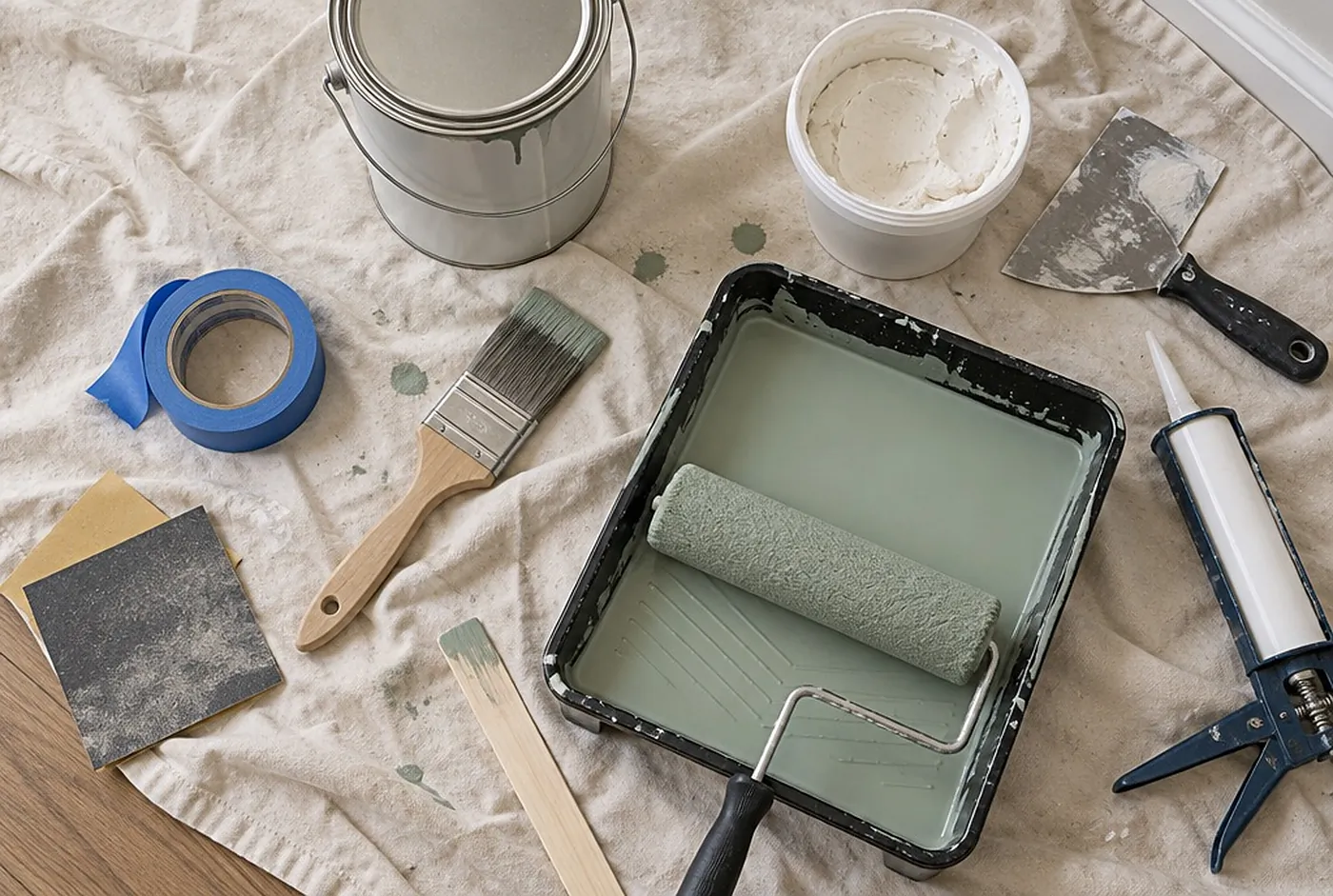
Step 1: Fix the moisture first
Check for a leak, and make sure the exhaust fan works and vents outside. Sherwin-Williams says to fix ventilation first and then remove the peeling paint. Paint over a wall that is still wet peels again.
Step 2: Scrape off everything loose
Use a putty knife or scraper and keep going until the edge of the paint will not lift. Sherwin-Williams says to test the coating in a 6 to 12 inch radius around the peeled area to be sure its adhesion is adequate.
Step 3: Clean the surface
Scrub mildew, soap scum and grime off with detergent and water, rinse, and let it dry completely; the EPA gives this advice for mold on hard surfaces. Do not paint or caulk a moldy surface.
Step 4: Sand and smooth
Sand the edge of the patch so it blends into the wall, and sand any glossy paint dull, as Sherwin-Williams advises. Fill dents with spackle, sand when dry and wipe off the dust.
Step 5: Re-caulk if needed
Where caulk at the tub, shower or sink has cracked or pulled away, cut it out and replace it with a caulk labeled for kitchens and baths, as Sherwin-Williams advises.
Step 6: Prime
Spot-prime the bare patch and any stains, and let the primer dry fully.
Step 7: Paint
Use a paint made for bathrooms (next section). Put on two thin coats and let each dry completely before the next, following the can. Painting the whole wall from corner to corner keeps a patch from showing as a different sheen.
Step 8: Let it dry
Benjamin Moore’s guide to painting bathroom walls says to wait 24 hours before returning the bathroom to everyday use. Check the can for yours, and run the fan or open a window while it dries.
Paint and Sheen for a Bathroom
Look for a paint labeled for bathrooms or high-humidity rooms. Sherwin-Williams suggests Duration Home as a finish coat for moisture-prone rooms and says it has Moisture Resistant Technology. Benjamin Moore’s bathroom-walls guide points to Aura Bath & Spa, a water-resistant matte, and a satin paint for more sheen.
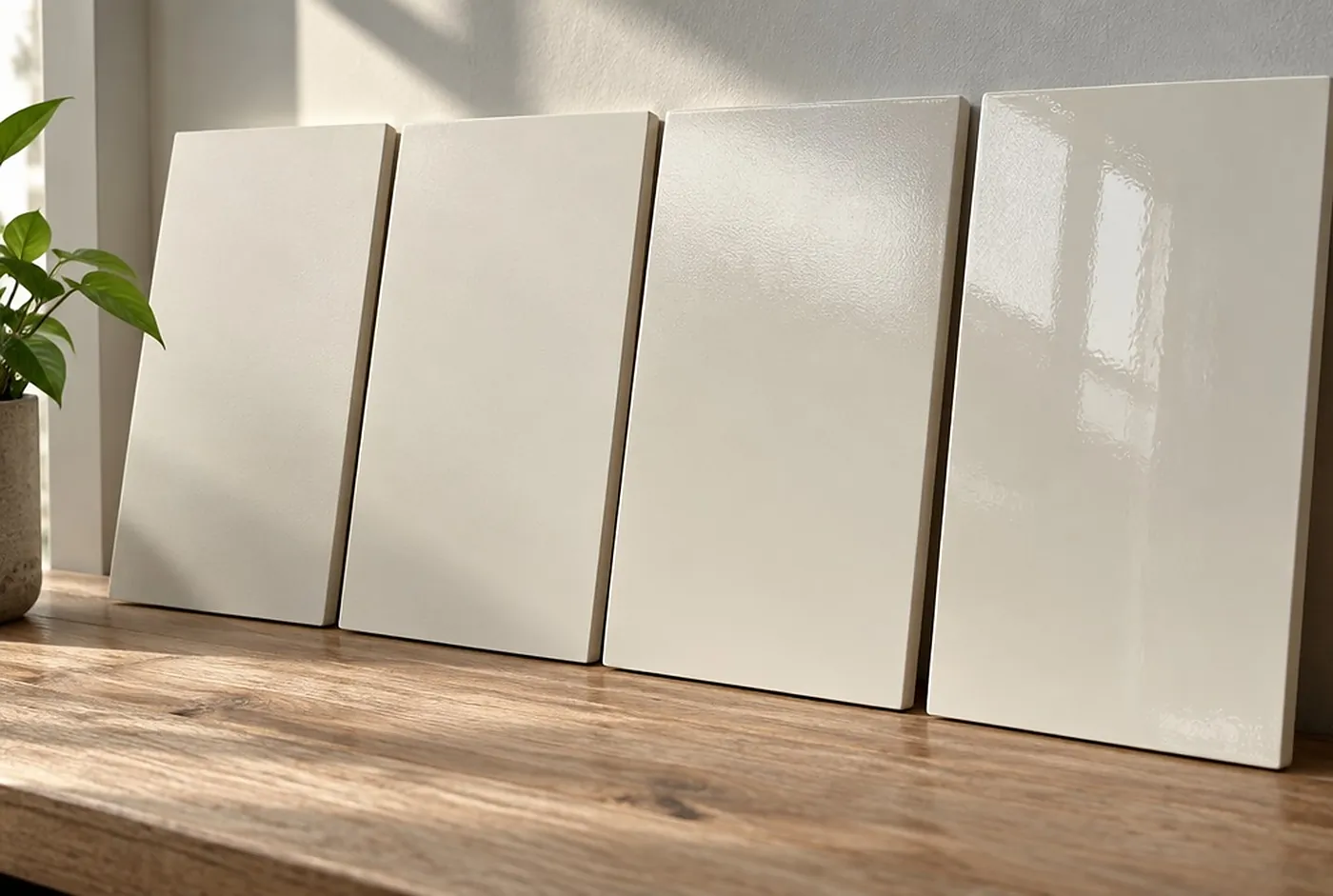
For sheen, Sherwin-Williams and This Old House say satin or semi-gloss on bathroom walls, and This Old House says the same for the ceiling over a shower, since warm steam rises. Eggshell can work in a powder room with no shower or tub. Sherwin-Williams says semi-gloss for trim. The paint sheen guide has the room-by-room chart. Paint dries slower in damp air, and Memphis is humid for much of the year, so give every coat its full drying time.
Ventilation: Keep It From Coming Back
By the numbers
- 1 CFM per square foot of bathroom, for rooms up to 100 square feet
- 20 minutes to leave the fan on after use
- Under 60% indoor humidity, ideally 30% to 50%
Size
The Home Ventilating Institute (HVI) recommends 1 CFM per square foot for a bathroom up to 100 square feet, with a 50 CFM minimum for small ones. Its example: a 7-by-10-foot bathroom needs about a 70 CFM fan.
Vent it outside
HVI says the fan should be ducted to the exterior of the house. The EPA says to vent moisture-producing appliances to the outside where possible.
Run it long enough
HVI recommends leaving the fan on for 20 minutes after use, and calls a timer a good solution because it turns the fan off at the proper time. With no fan, the EPA says to open a window when showering.
Check the humidity
The EPA says to keep indoor humidity below 60%, ideally between 30% and 50%. A humidity meter from a hardware store tells you where your bathroom stands.
A new fan is a different job
Replacing or adding a fan is electrical work and often a new duct. That is for an electrician or remodeler, not a painter.
When to Call a Pro
A small patch on firm drywall is a good DIY job. Call for help when:
- The drywall is soft, swollen, crumbling or sagging, or a stain keeps coming back. That points to water in the wall. A plumber finds and fixes the leak first; then the damaged drywall can be repaired.
- The peeling returns after you fixed the fan and repainted. Something is still wet.
- Mold covers more than a small patch. The EPA says that if the moldy area is less than about 10 square feet, roughly a 3-foot by 3-foot patch, you can usually handle the cleanup yourself. If it covers more, or there has been a lot of water damage, the EPA points you to its mold remediation guidance. That is not a paint job.
- Tiles are cracked or loose, or the grout and caulk are failing. Water gets behind them. See bathroom painting and tile repair.
How Dario’s Painting Handles It
At the free visit, Dario looks at the ceiling and walls, presses on the drywall, checks the caulk and grout, and tells you whether it is a paint problem or a water problem. For a paint problem, loose paint is scraped off, the surface is cleaned and primed, and the walls and ceiling are repainted with a moisture- and mildew-resistant bathroom paint in the right sheen. For soft drywall, once the leak is fixed, the damaged piece is cut out and replaced, then taped, mudded, sanded, primed and painted.
It is repair-size work: Dario does not do remodels, new fans, or plumbing and electrical changes. See bathroom painting and tile repair and drywall repair, or pick a visit time online.
Got questions?
Why does paint peel in a bathroom?
Steam and humidity get under the paint. Sherwin-Williams lists excess moisture from showering as a cause of peeling indoors. Other causes are a weak or unused exhaust fan, flat paint, and paint put over a dirty, soapy or glossy surface.
Can I paint over peeling bathroom paint?
No. Sherwin-Williams says peeling paint should be removed, and the surface cleaned and primed, before you repaint. Paint over loose paint peels off with it.
How do I stop bathroom paint from peeling?
Fix the moisture first: run the fan during showers and for 20 minutes after, as the Home Ventilating Institute recommends, and keep indoor humidity below 60%, as the EPA advises. Then clean, sand glossy spots, prime bare patches and repaint with a paint made for damp rooms.
What is the best paint finish for a bathroom?
Satin or semi-gloss for most bathrooms with a shower or tub, say Sherwin-Williams and This Old House. Eggshell can work in a powder room with no shower or tub. The paint sheen guide has the full chart.
Is peeling bathroom paint a sign of mold?
It can be. The EPA says paint applied over moldy surfaces is likely to peel, so look for black or gray speckling under the loose paint. The EPA says a moldy area under about 10 square feet can usually be scrubbed off with detergent and water and dried completely.
How long should I wait to shower after painting a bathroom?
Check the can. Benjamin Moore’s guide to painting bathroom walls says to wait 24 hours before returning the bathroom to everyday use, and This Old House says to let the room dry completely before showering.
Can a painter fix peeling bathroom paint in Memphis?
Yes. Dario’s Painting scrapes, cleans, primes and repaints, and replaces water-damaged drywall once the leak is fixed. See bathroom painting and tile repair, or get a free estimate.
Sources
- Sherwin-Williams: How to Fix Peeling Wall Paint Caused by Moisture — causes, ventilation first, clean and prime, the adhesion test
- Sherwin-Williams: Peeling (Problem Solver) — causes of peeling
- Sherwin-Williams: Blistering (Problem Solver) — moisture blisters, sanding glossy surfaces
- Sherwin-Williams: How to Choose Paint Finishes — sheens by room
- Benjamin Moore: How to Paint Bathroom Walls Like a Professional — mildew first, Aura Bath & Spa, a 24-hour wait
- This Old House: How to Choose the Right Type of Paint for Your Bathroom (updated Mar. 4, 2026) — moisture, sheen, primer, drying before showers
- U.S. EPA: A Brief Guide to Mold, Moisture and Your Home — humidity, bathroom fans, drying, paint over mold
- U.S. EPA: Mold Cleanup in Your Home — the 10-square-foot guideline
- Home Ventilating Institute: Bathroom Ventilation — 1 CFM per square foot, 20 minutes after use, timers
- Home Ventilating Institute: Bathroom Exhaust Fans — 50 CFM minimum, ducting outside
- U.S. EPA: Lead-Safe Renovations for DIYers — lead paint in pre-1978 homes
Checked October 2026. Product details change, so read the label on the paint you buy.