When is the best time to paint a house exterior in Memphis?
 Dario’s PaintingSep 30, 20268 min readLast updated: Sep 30, 2026
The best time to paint a house exterior in Memphis is fall, from mid-September through October, with April and May as the spring runner-up. Premium exterior paints like Sherwin-Williams Duration and Emerald and Benjamin Moore Aura can go on at 35°F and above, the surface should be more than 5°F above the dew point, and no rain should be expected for at least 2 to 3 hours. October in Memphis averages 75°F highs and 54°F lows, and August to October are the driest months. This guide covers what the labels say, NOAA’s weather by month, the best windows and how long an exterior job takes. To get a date on the calendar, see exterior painting in Memphis.
What Paint Labels Say About Temperature
Every exterior paint has a minimum temperature on its data sheet, and it covers the air, the surface and the paint itself. Premium lines now go down to 35°F. Sherwin-Williams notes that until a few years ago, exterior painting needed temperatures above 50°F.
By the numbers
- 35°F the lowest temperature on premium labels
- +5°F the surface must sit above the dew point
- 2–3 h with no rain expected after a coat
| Sherwin-Williams Duration and Emerald | Benjamin Moore Aura | |
|---|---|---|
| Lowest temperature | 35°F for the air, the surface and the paint | 35°F for the air and the surface |
| Highest temperature | Paint sets up quickly above 80°F | 100°F surface temperature |
| Dry to touch, then recoat | 1 hour, then 4 hours at 45°F and up and 50% humidity. At 35 to 45°F: 2 hours, then 24 to 48 hours | 1 hour, then 4 hours at 77°F and 50% humidity. High humidity and cool weather make it longer |
| Dew point | Surface at least 5°F above it | Benjamin Moore’s guide: more than 5°F above it |
| Rain after painting | Avoid if rain is expected within 2 to 3 hours | No rain-free time on the data sheet |
| Cold snap after painting | Do not apply if temperatures may drop below 35°F within 48 hours | Not stated on the data sheet |
Older paints and primers can need more. Sherwin-Williams’ data sheets say standard latex primers cannot be used below 50°F, and Benjamin Moore’s general exterior advice is to refrain from painting below 40°F. The label on your can is the rule.
Dew Point, Humidity and Rain
Temperature is only half of it. Moisture in the air and on the surface decides whether the paint forms a proper film.
The 5°F dew point rule
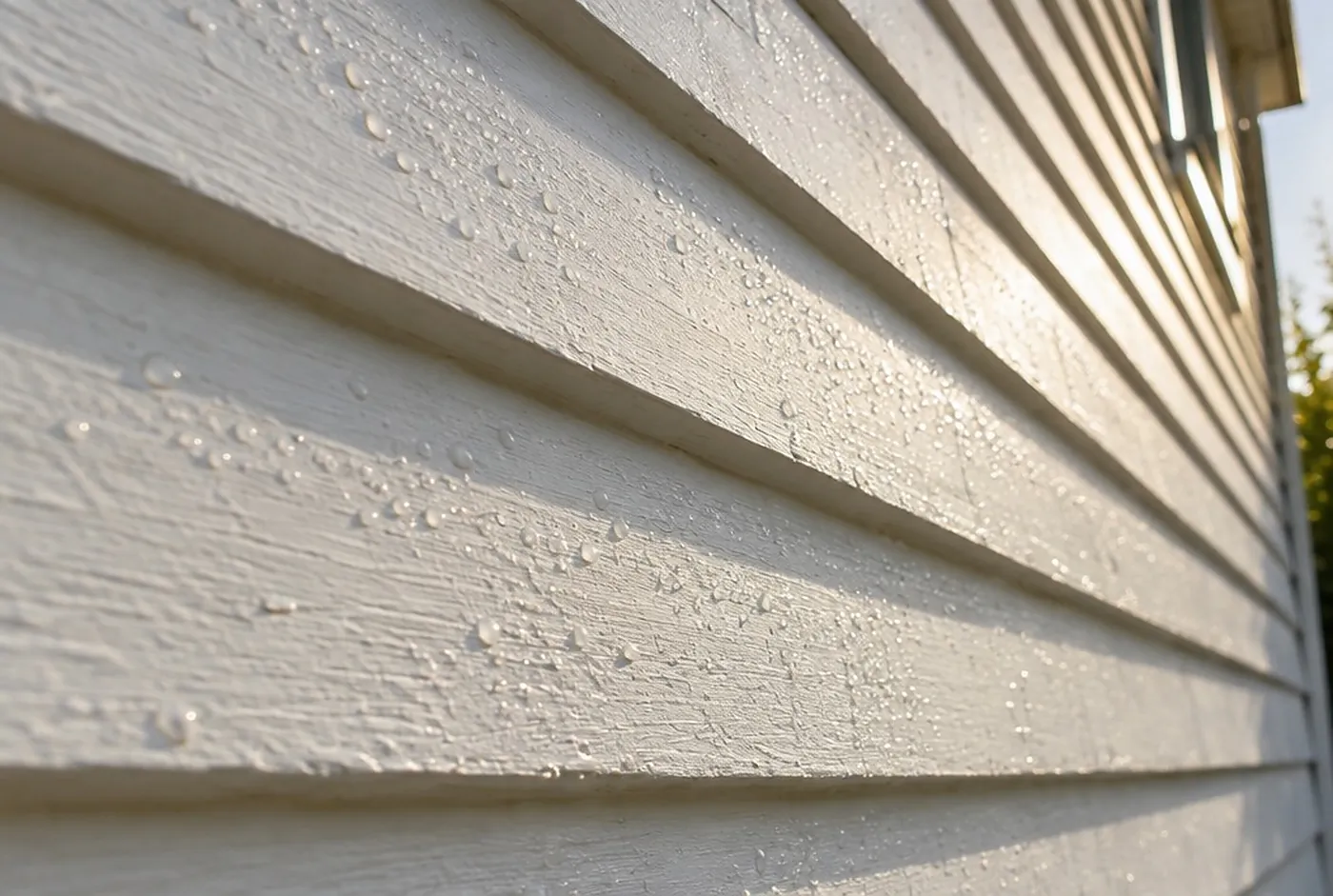
Paint a surface more than 5°F above the dew point, the temperature where water starts to condense. Benjamin Moore calls this the industry standard, and Sherwin-Williams’ labels say at least 5°F.
Humidity
Benjamin Moore advises humidity as low as possible, and This Old House puts the ideal below 60%. Humid air slows drying and lengthens recoat times.
Evening dew
Dew can form as soon as the sun sets. Sherwin-Williams says most products need at least 4 hours of dry time before moisture settles on them, so stop earlier on cool days.
Rain after a coat
Sherwin-Williams’ labels say to avoid painting if rain is expected within 2 to 3 hours. If rain catches you, Benjamin Moore says to stop at once and wait for the surface to dry. Bubbles that last more than a day or two must be scraped and repainted.
Rain before you paint
Sherwin-Williams says to wait a minimum of one day after a heavy rain, and until the surface is dry. Masonry and wood soak up more water than vinyl or aluminum. After a power wash, allow 24 to 48 hours.
The first 48 hours
Sherwin-Williams says the temperature should ideally stay in range and above the dew point for at least 48 hours after application. Cold and moisture stop the film forming, which can cause frosting, mildew growth and adhesion problems.
Direct sun
Benjamin Moore says to avoid painting in direct sunlight, and a dark wall in the sun runs far hotter than the air. Sherwin-Williams says the sun dries paint too fast, leaving brush marks, lap marks and poor adhesion.
Memphis Weather by Month
These are NOAA’s 1991–2020 climate normals for Memphis International Airport, the same highs, lows and rainfall the National Weather Service posts for Memphis. A normal is a 30-year average, so any single week can run hotter, colder or wetter.
| Month | Avg high / low (°F) | Rain (in) / rain days |
|---|---|---|
| Jan | 50.9 / 33.3 | 4.14 / 6.4 |
| Feb | 55.5 / 36.7 | 4.55 / 6.5 |
| Mar | 64.2 / 44.3 | 5.74 / 7.9 |
| Apr | 73.4 / 53.0 | 5.87 / 7.2 |
| May | 81.7 / 62.4 | 5.27 / 6.9 |
| Jun | 89.4 / 70.4 | 3.99 / 5.8 |
| Jul | 91.9 / 73.6 | 4.82 / 6.3 |
| Aug | 91.5 / 72.6 | 3.37 / 4.9 |
| Sep | 86.0 / 65.9 | 3.03 / 4.1 |
| Oct | 75.1 / 54.0 | 3.98 / 5.3 |
| Nov | 62.6 / 42.9 | 4.69 / 5.9 |
| Dec | 53.4 / 36.2 | 5.49 / 7.2 |
The rainy months are March, April, May and December: April has the most rain and March the most rain days. August, September and October are the driest, and Memphis gets about 55 inches of rain a year. Freezing nights (32°F or below) peak at about 15 in January, and days at 90°F or higher peak at about 22 in July.
Humidity is the other half. Averaging NOAA’s hourly normals gives a dew point of about 67°F in June, 70°F in July and 69°F in August, against about 32 to 35°F in winter. Around dawn in July the normal air temperature is only about 75 to 76°F, just 5°F above that 70°F dew point.
The Best Windows to Paint in Memphis
Fall (mid-September through October) is best, April and May come next, June to August is workable with limits, and December to February works only on mild stretches. Put the label limits next to the NOAA numbers and these four windows stand out.
Memphis temperatures by month, and the windows to paint
Average high and low for each month, against the 35°F label minimum and the 90°F days that make paint set up too fast.
- January: average high 50.9°F, low 33.3°F. 51° 33°
- February: average high 55.5°F, low 36.7°F. 56° 37°
- March: average high 64.2°F, low 44.3°F. 64° 44°
- April: average high 73.4°F, low 53.0°F. 73° 53°
- May: average high 81.7°F, low 62.4°F. 82° 62°
- June: average high 89.4°F, low 70.4°F. 89° 70°
- July: average high 91.9°F, low 73.6°F. 92° 74°
- August: average high 91.5°F, low 72.6°F. 92° 73°
- September: average high 86.0°F, low 65.9°F. 86° 66°
- October: average high 75.1°F, low 54.0°F. 75° 54°
- November: average high 62.6°F, low 42.9°F. 63° 43°
- December: average high 53.4°F, low 36.2°F. 53° 36°
- Best: mid-September through October
- Runner-up: April and May
- Workable, with limits: June to August
- Mild stretches only: December to February
| Window | What the numbers say | Watch for |
|---|---|---|
| Fall: mid-September to October | The best overall. September is the driest month, October highs average 75°F and lows 54°F, and the dew point drops from about 62°F to 51°F. | September can still hit 90°F (about 10 days). November adds about 4 freezing nights. |
| Spring: April to May | Mild: April highs of 73°F and lows of 53°F, above the 35°F label minimum. | The rainiest stretch of the year. Tree pollen coats everything for a few weeks and has to be washed off first. |
| Summer: June to August | Workable, with limits. Highs run 89 to 92°F, and August is one of the driest months. | About 15 to 22 days a month at 90°F or higher, dew points near 67 to 70°F, and paint that sets up fast above 80°F. Follow the shade. |
| Winter: December to February | Only on mild stretches. Premium paints can go on at 35°F. | Lows average 33 to 37°F with 10 to 15 freezing nights a month, and the temperature has to stay in range for about 48 hours. |
A window is not a promise: every exterior still comes down to the forecast for the days it needs.
How Long an Exterior Paint Job Takes
How long an exterior takes
- 3–4 days for an average-sized house and a professional team
- 5–6 days for a three-story or detailed house
- 30–50% of the time goes to prep
- 24–48 h of drying after a power wash
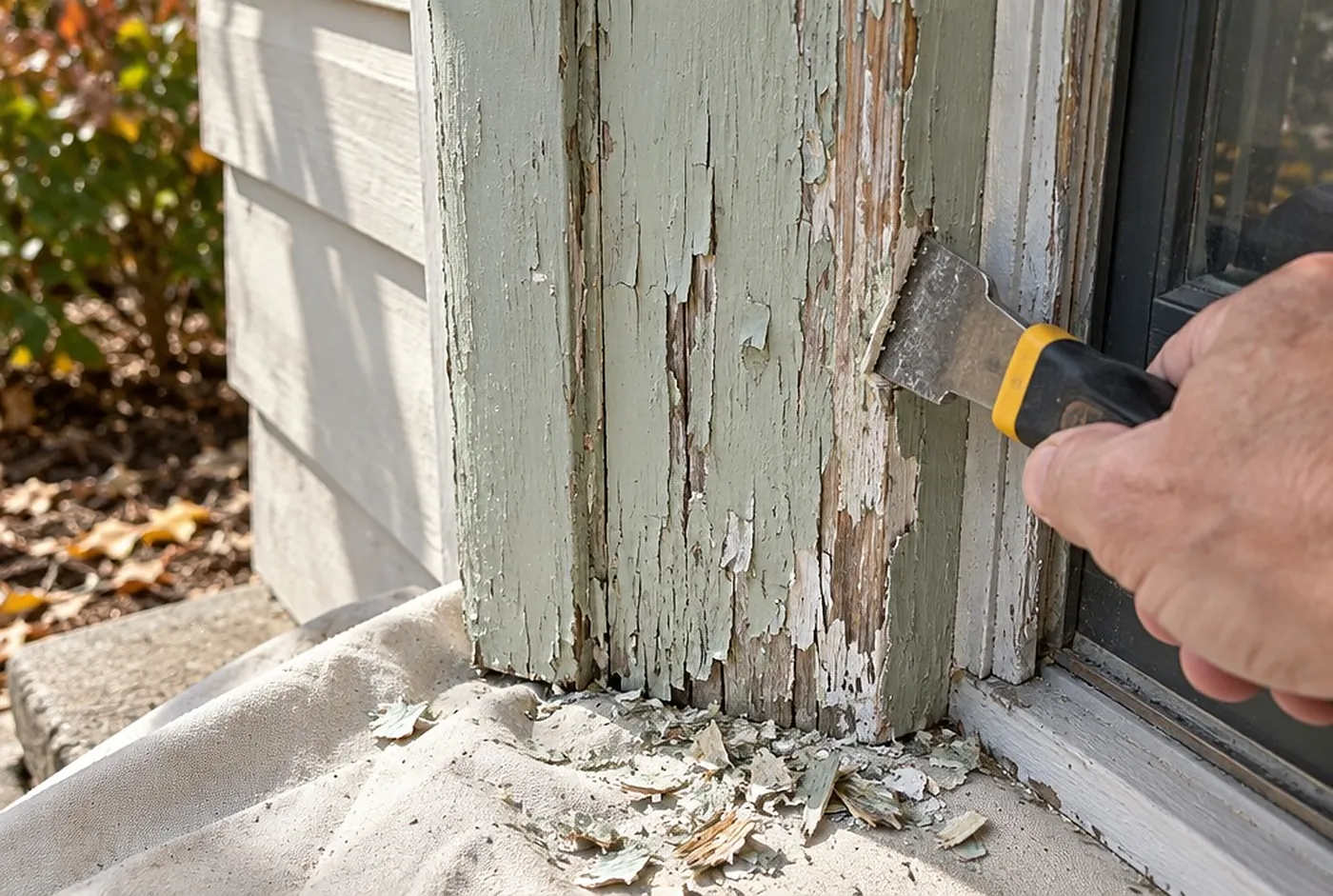
Weather days come on top of that. Dario’s Painting’s written estimate carries a start day and an end day, and weather is the only thing that moves an exterior. See exterior painting and how a job goes.
A Go/No-Go Checklist Before Each Coat
Check these before a coat goes on, and again before you pack up for the day.
Go or no-go, before each coat
- Air, surface and paint are all above the label minimum, and the forecast keeps them there for the next 48 hours.
- The surface is more than 5°F above the dew point.
- No rain is expected for at least 2 to 3 hours, and ideally not for 24.
- The surface is dry: at least a day after a heavy rain and 24 to 48 hours after a power wash.
- The wall is out of direct sun. Aura’s data sheet caps the surface at 100°F.
- Mildew, pollen and dirt are washed off. Sherwin-Williams says paint over mildew lets it grow through the new coat.
- There are at least 4 hours of daylight left for the coat to dry before evening dew.
Got questions?
What is the best time of year to paint a house exterior in Memphis?
Fall, from mid-September through October, is the best time to paint outside in Memphis, with April and May next. Both stretches stay above paint-label minimums and dodge the worst summer heat. Dario’s Painting looks for a mild, dry stretch: summer works with an eye on the afternoon heat, and winter depends on the temperature, since every paint has a minimum on its label.
What is the lowest temperature you can paint a house outside?
35°F for Sherwin-Williams Duration and Emerald and Benjamin Moore Aura, according to their data sheets. The air, the surface and the paint all have to be above it, and Sherwin-Williams says it should ideally stay in range for 48 hours. Standard latex primers need 50°F, and Benjamin Moore’s general exterior advice is not to paint below 40°F.
Can you paint the outside of a house in high humidity?
It is harder. Humid air slows drying and lengthens recoat times, and the surface has to stay more than 5°F above the dew point. Benjamin Moore advises humidity as low as possible, and This Old House puts the ideal below 60%. In a Memphis summer, wait for the morning dew to dry and stop early.
How long after rain can you paint a house exterior?
Sherwin-Williams suggests a minimum of one day after a heavy rain, and the surface must be dry. Masonry and wood absorb more water than vinyl or aluminum, and too much moisture in the wall leads to peeling. After a power wash, allow 24 to 48 hours to dry.
How long does it take to paint a house exterior?
HomeAdvisor says a professional team finishes an average-sized house in three to four days, and three-story or heavily detailed houses take five to six. Prep can be 30 to 50 percent of the time, and weather days come on top. Your written quote from Dario’s Painting gives a start day and an end day.
When is the best time to stain a deck or fence in Memphis?
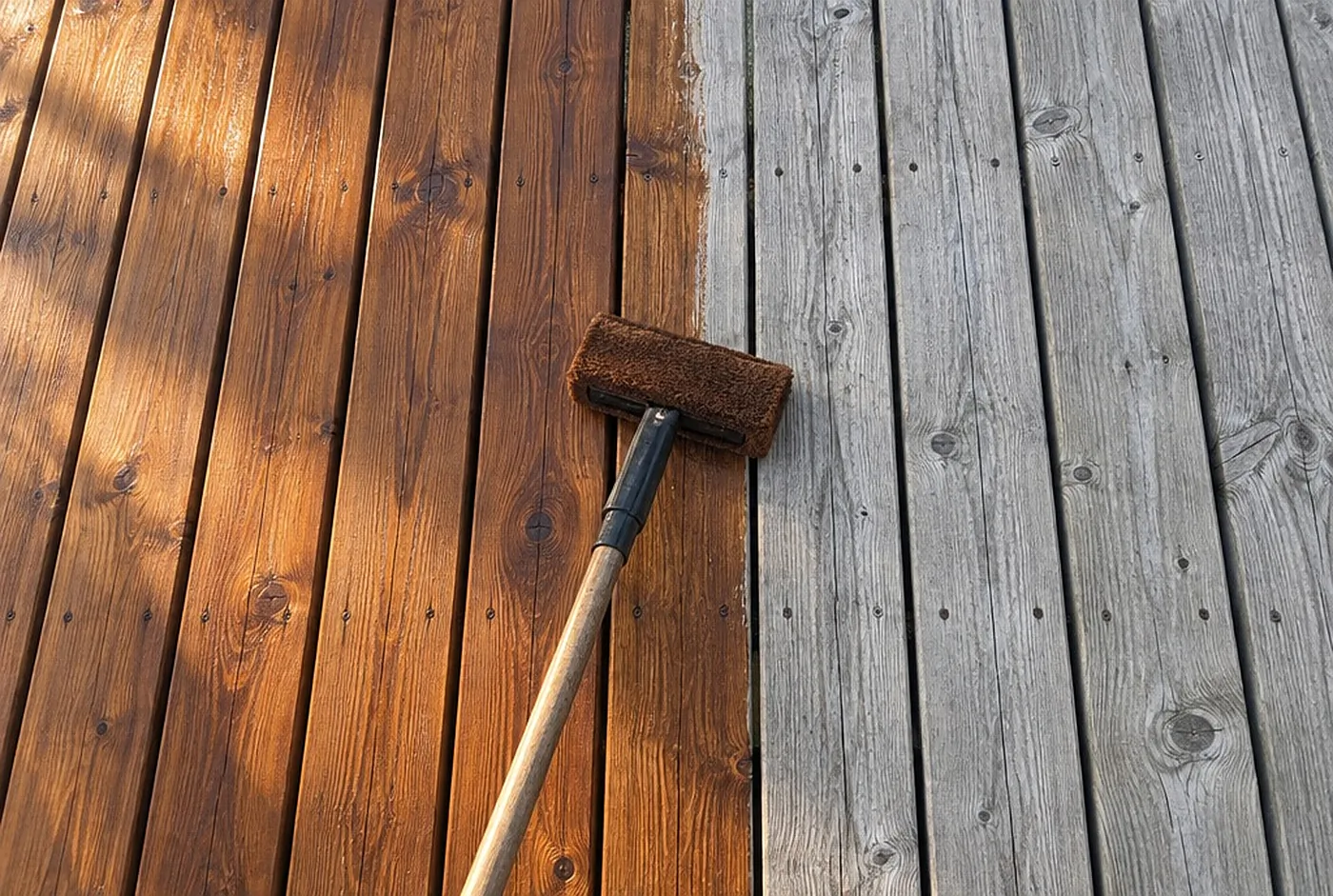
Spring and fall, according to Sherwin-Williams: summer brings extreme heat and direct sun, and winter brings cold and precipitation. Its fence-staining guide puts the optimal range at 40 to 90°F, and its contractor FAQ calls 50 to 90°F the safe range, with 70°F ideal. Avoid high humidity, the day after a rainstorm and direct sun. See how to stain a fence or deck and how often to repaint.
Sources
- National Weather Service Memphis: Memphis Normal Climate Data — monthly average highs, lows and rainfall
- NOAA NCEI: 1991–2020 U.S. Monthly Climate Normals, Memphis International Airport (USW00013893) — rain days, days at 90°F or higher, freezing nights
- NOAA NCEI: 1991–2020 U.S. Hourly Climate Normals, Memphis International Airport (USW00013893) — hourly temperature and dew point, averaged by month
- Sherwin-Williams: Duration Exterior Acrylic Satin product data sheet (3/2026) — 35°F minimum, 5° above dew point, rain within 2–3 hours, dry and recoat times
- Sherwin-Williams: Emerald Exterior Acrylic Satin product data sheet (3/2026) — same application limits as Duration
- Benjamin Moore: Aura Waterborne Exterior Low Lustre N634 technical data sheet — 35°F minimum, 100°F surface maximum, dry and recoat times
- Benjamin Moore: Temperature Guide for Exterior Painting — dew point rule, humidity, direct sun, rain
- Benjamin Moore: How to Paint Your Home Exterior — refrain from painting below 40°F
- Sherwin-Williams: Exterior Product Application FAQs — 48 hours, 4 hours before dew, a day after heavy rain, direct sun; for stain, a 50–90°F safe range with 70°F ideal
- Sherwin-Williams: How to Paint a House Exterior — 24–48 hours to dry after power washing
- Sherwin-Williams: Maintenance & Repair FAQs — spring and fall are best for deck staining
- Sherwin-Williams: How to Stain a Wood Fence — the optimal temperature for staining wood is 40–90°F
- This Old House: How to Paint Your Home’s Exterior — humidity below 60%, no rain for 24 hours
- HomeAdvisor: How Much Does It Cost to Paint the Exterior of a House? (updated June 2026) — three to four days for an average-sized house, five to six for large ones
- Bob Vila: Should You DIY or Hire a Pro for Exterior House Painting? — prep can be 30 to 50 percent of the time
Checked September 2026. Prices and product details change; your written estimate has the numbers for your house.