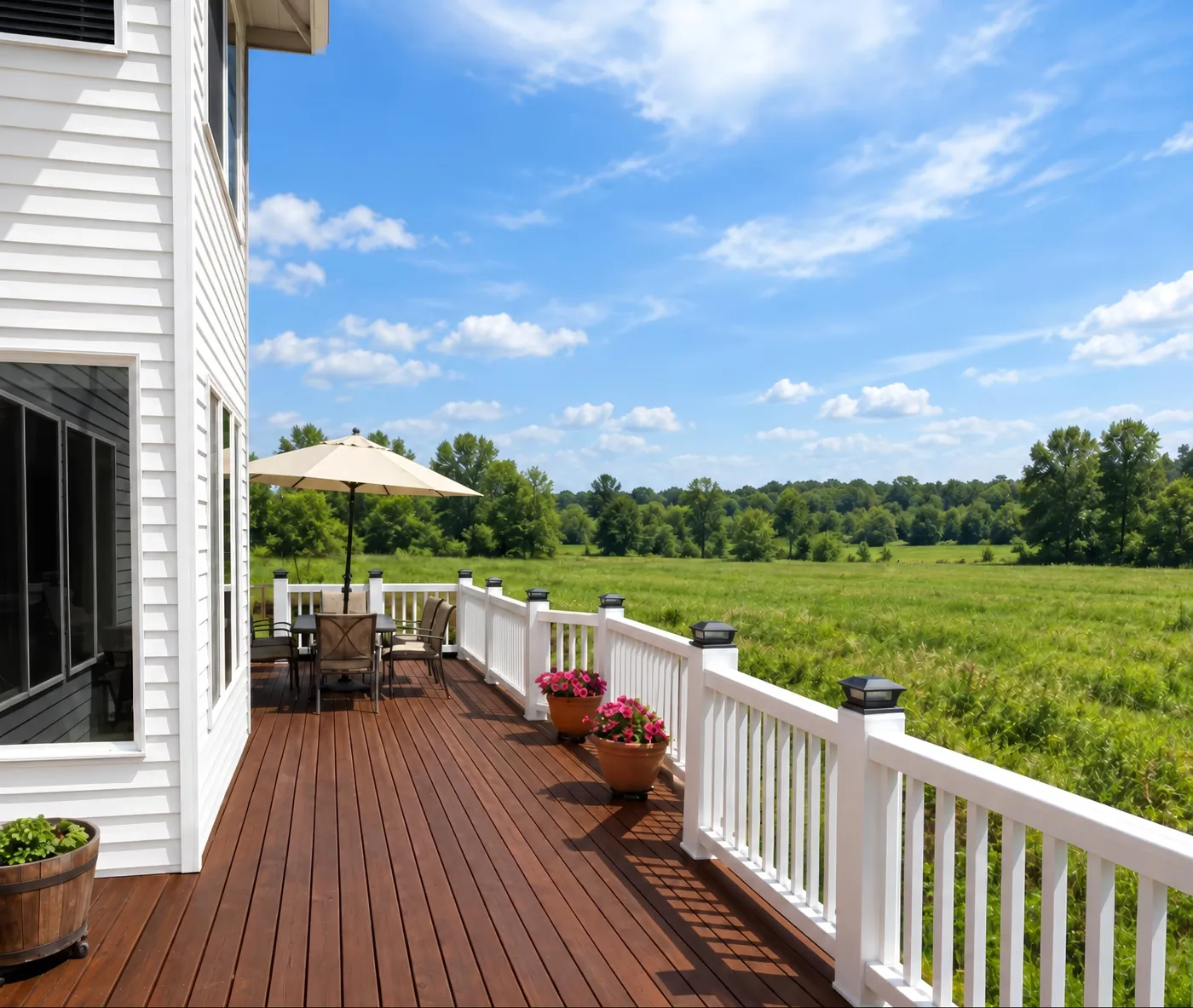
How to stain a fence or deck, step by step
 Dario’s PaintingSep 30, 20268 min readLast updated: Sep 30, 2026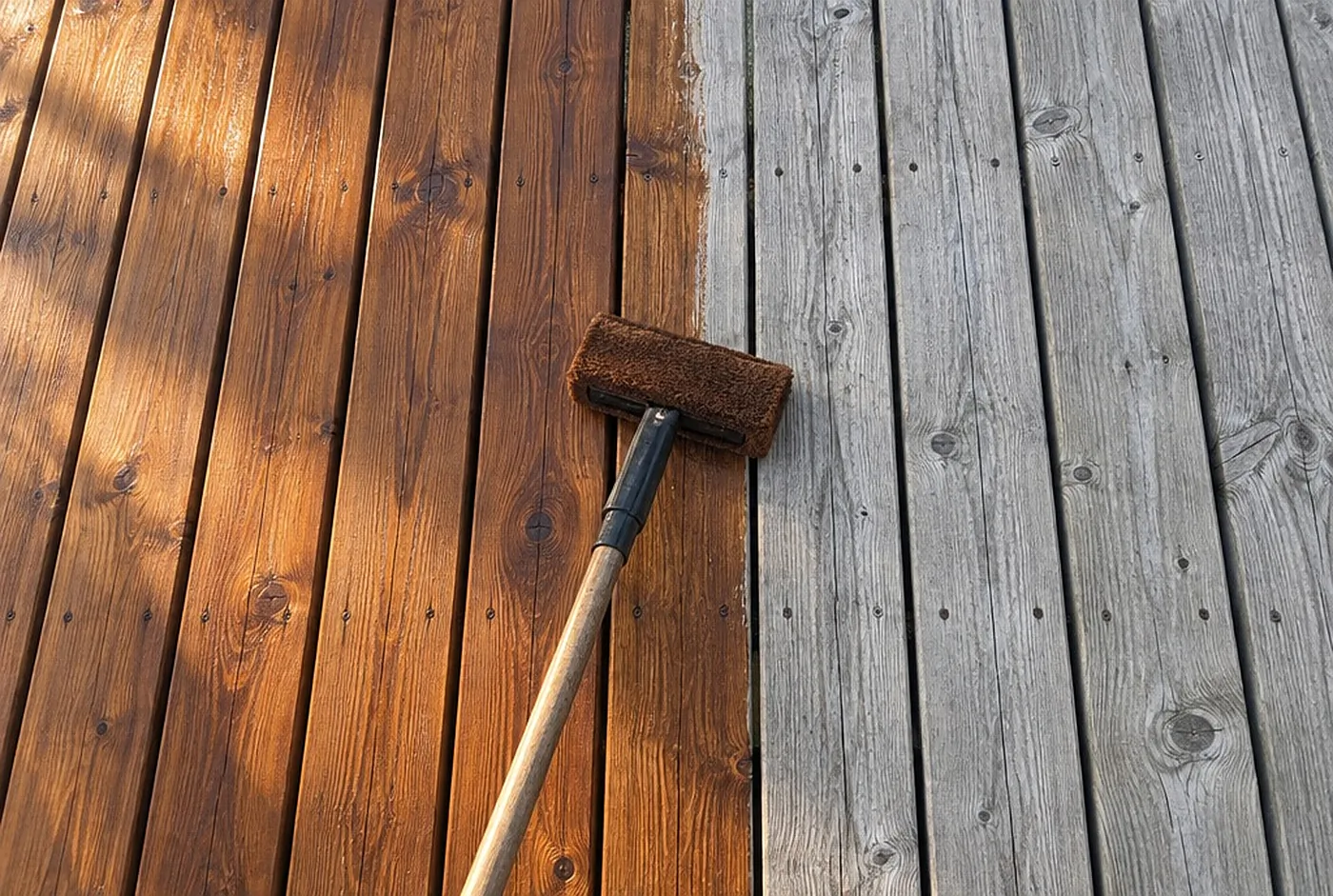
To stain a deck or fence, clean the wood, let it dry for at least 24 to 48 hours, repair and sand it, pick a stain, then apply one or two coats with a brush, roller or sprayer and back-brush it in. Work on a dry day between about 40°F and 90°F, out of direct sun, and never on new pressure-treated wood until it passes a water test. Plan on restaining every 2 to 3 years. This guide covers what you need, the steps, stain types, Memphis weather, drying times and when to call a pro. Rather hand it off? See fence and deck staining in Memphis and pressure washing.
What You Need
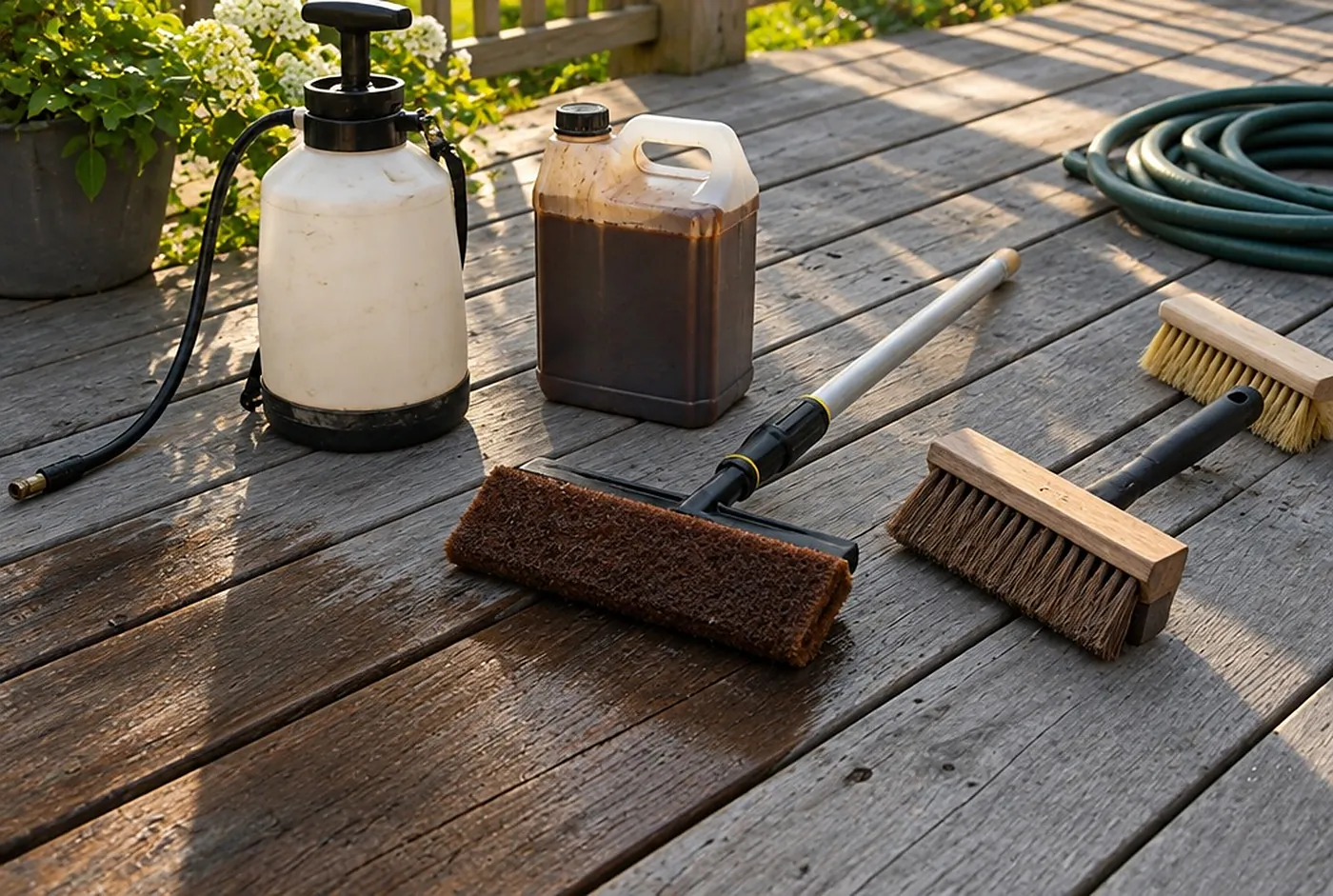
Your supply list
- Deck or wood cleaner, stiff brush and hose. Lift dirt, algae and mildew so the stain can soak in.
- Sandpaper or a sanding sponge. Smooth splinters and rough spots, and scuff old stain.
- Stain. A gallon covers about 250 to 350 square feet of deck. For a fence, multiply length by height, then by two for both sides.
- Brush, pad or roller on an extension pole. A brush handles railings and gaps; a roller with a ¼-inch nap covers flat boards. A 4-inch to 6-inch block brush gives more control.
- Pump or airless sprayer (optional). Covers a fence fast, but you still need a brush to back-brush.
- Tarps and drop cloths. Protect siding, plants, lawn and walkways.
- Gloves, safety glasses and a dust mask. Protect you from cleaner, stain and sanding dust.
How to Stain a Deck or Fence, Step by Step
- 1 Clear
- 2 Clean
- 3 Dry
- 4 Repair and sand
- 5 Choose the stain
- 6 First coat
- 7 Second coat
- 8 Keep off
Step 1: Clear and protect the area
Sweep off leaves and debris and move furniture and planters. Cut grass and shrubs back from a fence, cover plants, siding and walkways with tarps, and take off latches and other hardware.
Step 2: Clean the wood
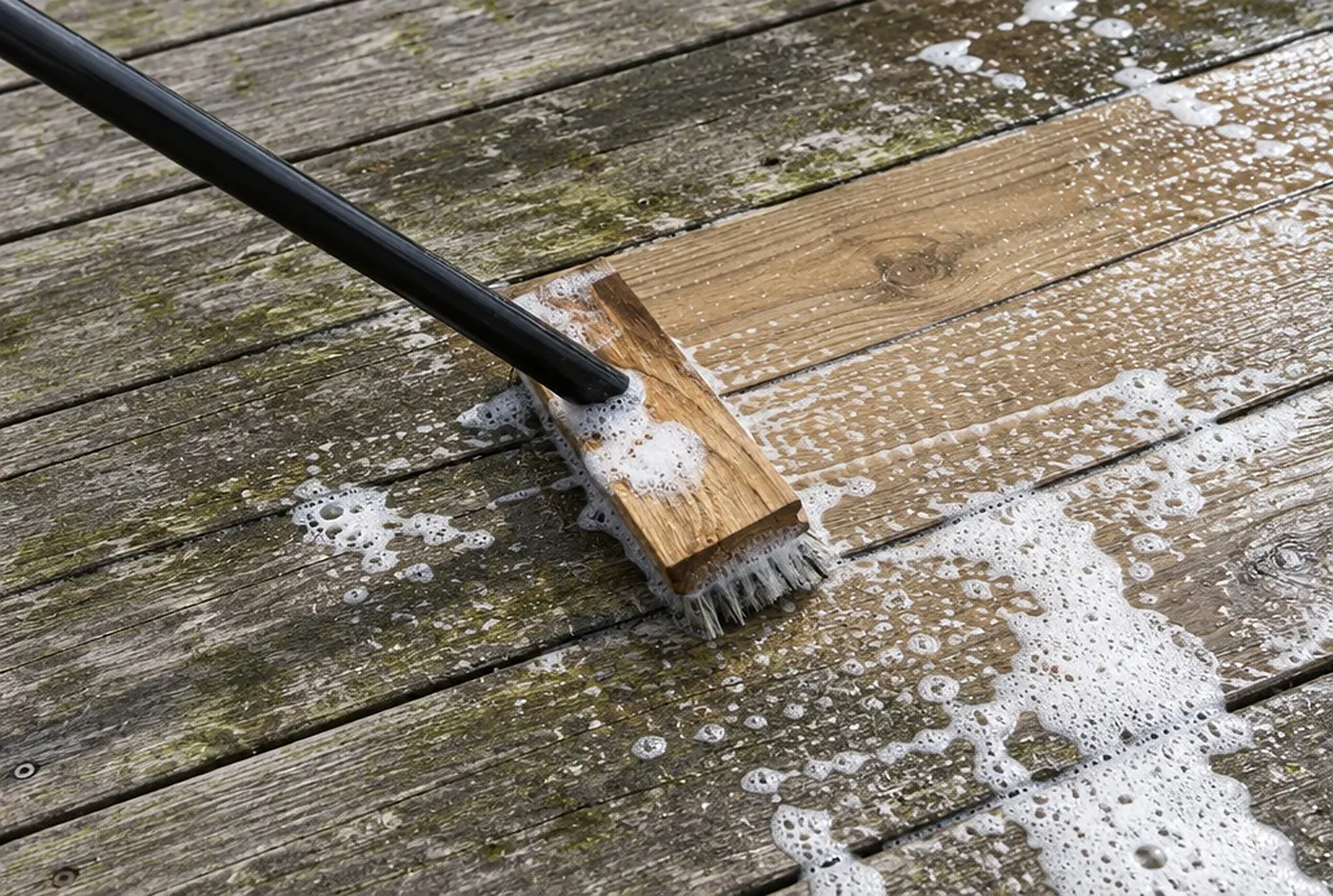
Scrub with a deck or wood cleaner and a stiff brush, then rinse with a hose. Fences in shade and decks under trees grow mildew and green algae. Scrub it all off, because stain put over it traps it. If you use a pressure washer, use a 45-degree tip at 1,200 to 1,400 psi, hold it 8 to 12 inches away and spray with the grain. Go easy on soft woods like cedar.
Step 3: Let the wood dry
Give it at least 24 to 48 hours of dry weather, and longer when it is damp. Then sprinkle water on the boards: if it soaks in, the wood is ready, and if it beads up, wait.
Step 4: Repair and sand
Replace rotted boards, tighten loose fasteners and sand off splinters and rough spots. Sand lightly over old stain so the new coat soaks in evenly, then brush or vacuum off the dust.
Step 5: Choose the stain
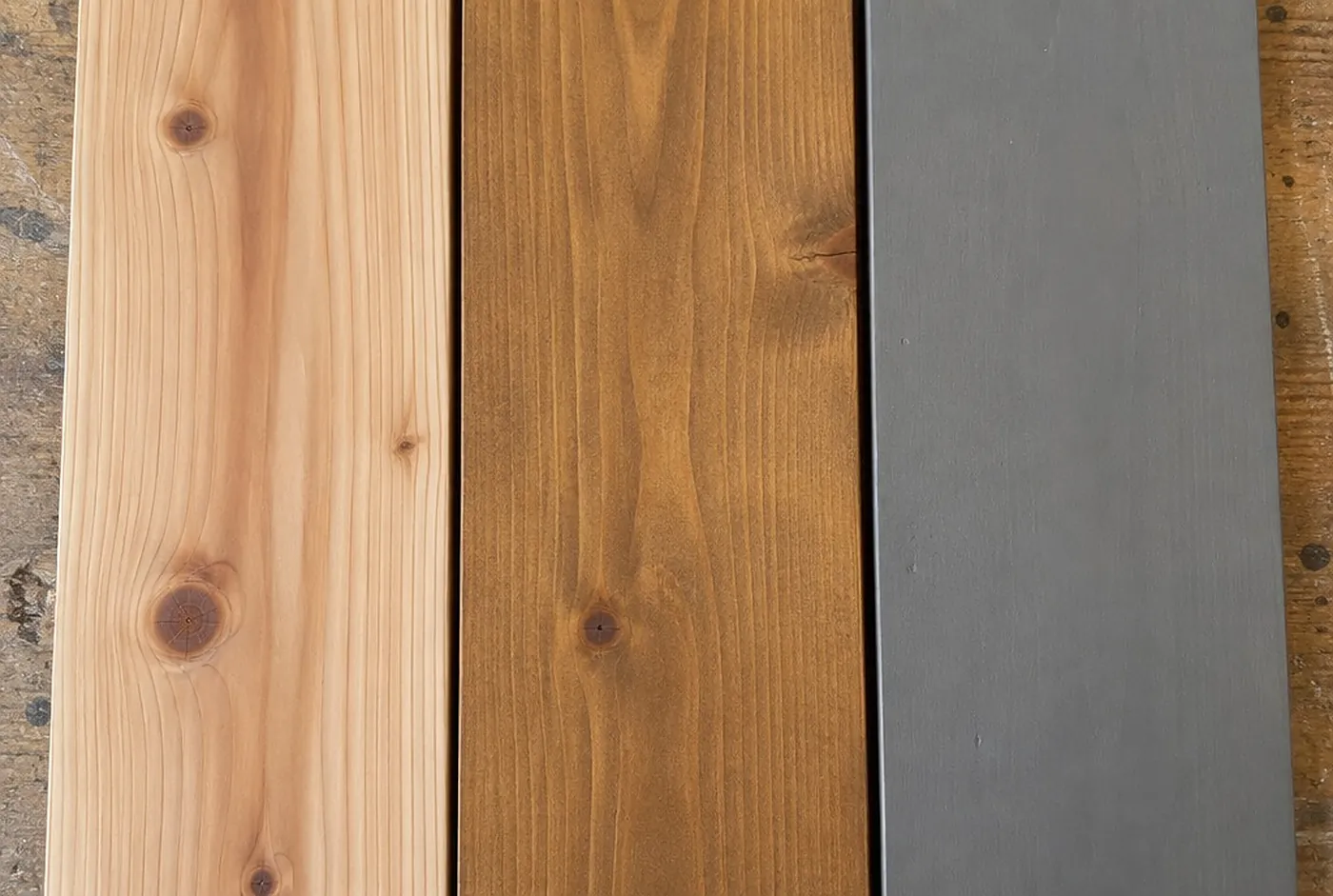
Pick transparent, semi-transparent or solid (see the table below), and oil-based or water-based. Try it on a hidden board and let it dry to check the color.
Step 6: Apply the first coat
Work with the grain, a few boards at a time, keeping a wet edge. Brush railings and the gaps between boards first, then roll or spray the flat areas and back-brush right away so the stain soaks in instead of pooling.
Step 7: Add a second coat if you need it
Most decks and fences need one to two coats. For a deeper color, wait at least 4 hours before the second coat, and up to 24 hours if you can. Wipe up any stain that pools.
Step 8: Keep off until it dries
Walk on it sparingly for the first day, and wait 24 to 48 hours before moving furniture back. Keep sprinklers off it too.
Transparent vs Semi-Transparent vs Solid Stain
Transparent, semi-transparent or solid
-
Transparent
Clear or lightly tinted. It shows off the wood but gives the least protection.
- Grain shows: 5 of 5
- Protection: 1 of 5
Plan to restain Every 1 to 2 years
-
Semi-transparent
Adds color while the grain shows. It soaks in, so it wears away rather than peels.
- Grain shows: 3 of 5
- Protection: 3 of 5
Plan to restain Every 2 to 3 years
-
Solid
Opaque like paint. It hides the grain and flaws and gives the most UV and weather protection.
- Grain shows: 1 of 5
- Protection: 5 of 5
Plan to restain Every 3 to 5 years
Restaining intervals are from This Old House; Sherwin-Williams says every 2 to 3 years for a deck or fence, and the wood, foot traffic and climate move the number. Sunlight turns bare wood gray, and a stain with pigment protects it better than a clear finish. See how often to repaint for the rest of the house.
On deck boards, the USDA Forest Products Laboratory recommends penetrating finishes, because film-forming finishes such as paint and solid-color stains are prone to trap moisture and peel. They can do well on railings. Stain tends to wear away rather than peel, while paint can peel if moisture gets behind it.
Brush, Roller or Sprayer
| Tool | Good for | Watch for |
|---|---|---|
| Brush | Railings, tight spaces and the gaps between boards. | Natural bristles for oil-based stain, synthetic for water-based. |
| Roller or pad | Big flat areas. Easy for beginners. | Back-brush right after, so the stain soaks in and does not sit on top. |
| Sprayer | Fences and large areas. Sherwin-Williams calls a pump sprayer the easiest way to stain a fence. | Overspray and runs. Mask everything nearby, and practice first with an airless sprayer. |
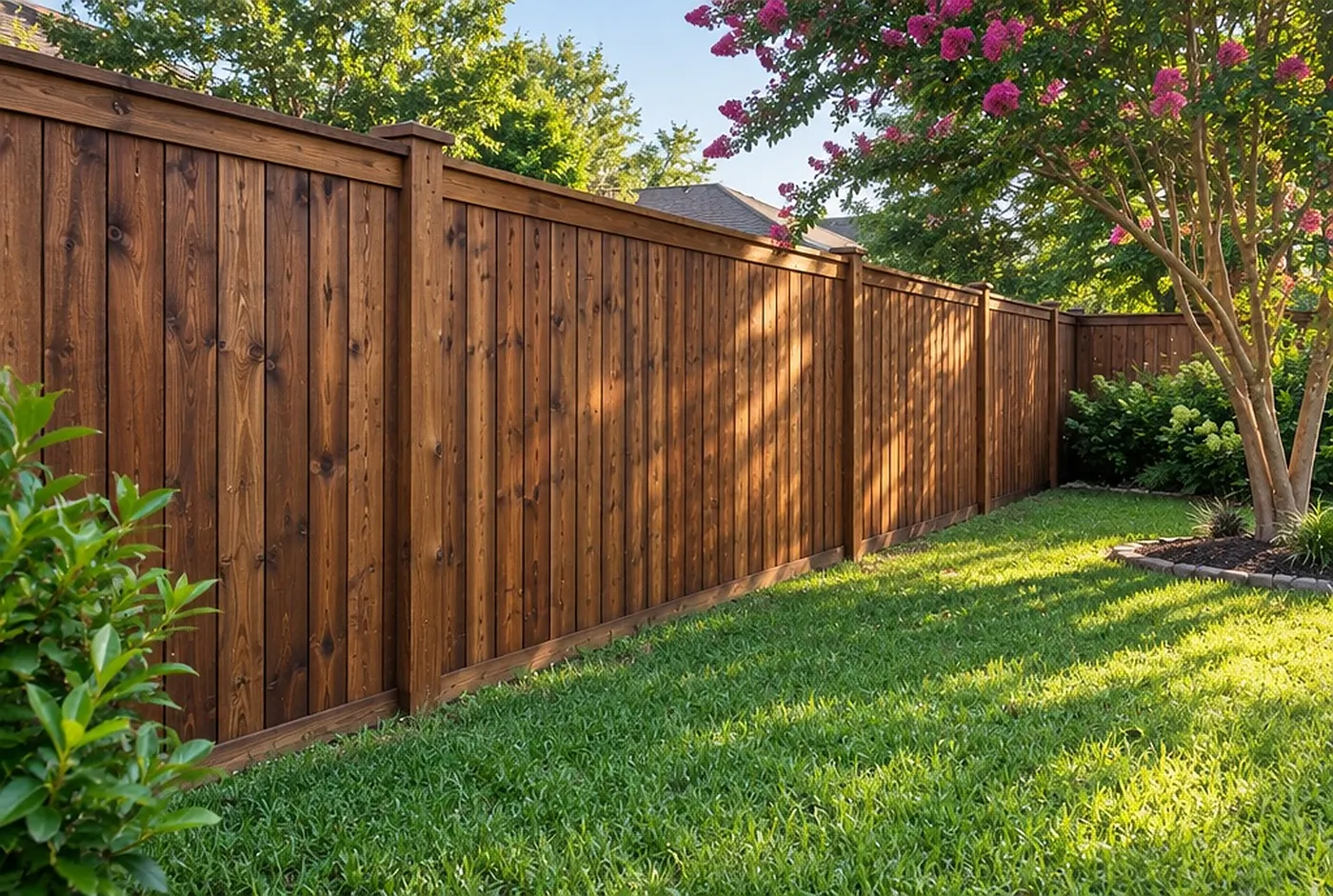
To stain a fence with a sprayer, work in 6-inch strips, vertically on vertical boards and horizontally on horizontal ones, one panel at a time. Brush each section right after you spray it, while the stain is still wet.
Weather Windows for Staining in Memphis
Stain needs dry wood and a dry stretch. Sherwin-Williams puts the optimal range at 40°F to 90°F on a low-humidity day with no rain, and says to confirm no rain for 24 to 48 hours. Benjamin Moore’s stain data sheet sets the same 40°F floor and a 90°F surface limit. Sherwin-Williams’ contractor FAQ gives a narrower “safe range” of 50°F to 90°F for exterior stain, with 70°F ideal.
By the numbers
- 40–90°F the range Sherwin-Williams gives for staining
- 24–48 h with no rain in the forecast
- Shade not midday sun, which flash-cures stain into blotches
Memphis adds two wrinkles. Summer sun bakes deck boards, and staining at midday or in direct sun causes flash curing, which looks blotchy and shortens the stain’s life, says Sherwin-Williams. Humidity slows curing and hurts adhesion, and Memphis is humid for much of the year.
Stain when the boards are in shade, and pick a dry spell in fall or the calmer weeks of spring. Wood that has just been washed or rained on needs time to dry first, so dates depend on the forecast. See when to paint outside in Memphis.
New Pressure-Treated Wood Must Dry First
New pressure-treated wood is often still wet from the treatment and needs to dry out before it takes stain. Guides give a wide range: Sherwin-Williams says 4 to 8 weeks for a new deck in one guide and at least 6 months for pressure-treated wood in another; This Old House says about six months, and HomeAdvisor says six to eight weeks for a new fence.
How long new pressure-treated wood should dry first
The guides don’t agree, which is why the water test beats the calendar.
Sherwin-Williams, new deck
:- 4–8 weeks
HomeAdvisor, new fence
:- 6–8 weeks
This Old House
:- About 6 months
Sherwin-Williams, treated wood
:- 6 months or more
So test instead of counting days. Sprinkle water on the boards: if it soaks in, stain; if it beads up, wait. Benjamin Moore’s stain data sheet also requires wood moisture below 15%. Dario can check the wood at the visit and tell you when it is ready.
The water test
Sprinkle water on the boards. If it beads up, wait. If it soaks in, the wood is ready for stain.
When to Call a Pro
A small fence or deck is a fair weekend job if the weather cooperates. Sherwin-Williams lists deck staining as 3 to 5 days of work with drying, and HomeAdvisor puts a 500-square-foot deck at about 20 hours. Call a painter for a long fence run, a high or multi-level deck, gray or peeling wood, or a firm date.
By the numbers
- 3–5 days of work for a deck, drying included
- About 20 h for a 500 sq ft deck
Dario’s Painting stains decks, fences, porches and sheds: the wood is cleaned and prepped first, given time to dry, then stained or painted and sealed, and the written quote lists what is included. See fences, decks and sheds, and our house painting cost guide for national price ranges.
Got questions?
How many coats of deck stain do I need?
One or two. Sherwin-Williams says most decks need one to two coats, and Benjamin Moore’s solid-color stain data sheet says two coats give optimal performance on bare wood. HomeAdvisor says one coat is enough for most fences. Wait at least 4 hours between coats.
How long do deck stains last?
Plan on 2 to 3 years, says Sherwin-Williams. This Old House puts transparent finishes at 1 to 2 years, semi-transparent at 2 to 3 and solid at 3 to 5. A quick test: splash water on the wood, and if it soaks in instead of beading, it is time to restain.
How do I stain a fence with a sprayer?
Cover anything nearby, then spray in 6-inch strips, one panel at a time, and back-brush each section right away so the stain soaks in and does not run. Sherwin-Williams calls a pump sprayer the easiest way to stain a fence.
Can I stain a new pressure-treated fence right away?
Usually not. New pressure-treated wood is often still wet from the treatment and needs to dry out before it takes stain evenly. Sprinkle water on it: if the water beads up, wait. Dario can check the wood at the visit and tell you when it is ready.
Can I paint a deck instead of staining it?
You can, but stain is usually the better choice for deck boards. This Old House says paint forms a film that can peel and chip, is slippery when wet and takes more prep to redo. The Forest Products Laboratory says paint and solid-color stains are prone to peel, though they can do well on railings.
How much does it cost to stain a deck or fence?
Nationally, HomeAdvisor puts deck staining at $550 to $1,250, about $1 to $4 per square foot, and fence staining or painting at $750 to $4,250. Those are national averages, and a written estimate gives the price for your wood.
Sources
- Sherwin-Williams: How to Plan for Deck Staining — 3–5 days; dry 24–48 hours; 250–350 sq ft per gallon; one to two coats; stain every 2–3 years; pressure-treated wood 6 months
- Sherwin-Williams: How to Prepare a Deck for Staining — cleaner, scrubbing, pressure washer at 1,200–1,400 psi with a 45-degree tip, 8–12 inches
- Sherwin-Williams: How to Apply Deck Stain — brush, roller, pad and sprayer; back-brushing; 4 hours between coats; avoid midday sun and high humidity
- Sherwin-Williams: How to Prep & Stain a New Wood Deck — wait 4–8 weeks; water drop test; dry 24–48 hours before use
- Sherwin-Williams: How to Stain a Wood Fence — 40–90°F; low humidity, no rain; pump sprayer and back-brushing; every 2–3 years
- Sherwin-Williams: How to Prep and Stain an Old Deck — confirm no rain for 24–48 hours; stain railings first
- Benjamin Moore: Arborcoat Waterborne Exterior Stain Solid Color 640 data sheet — not below 40°F; wood moisture below 15%; back-brushing; 1–2 coats; 48 hours before furniture
- USDA Forest Products Laboratory: Finishes for Wood Decks — penetrating finishes for deck boards; paint and solid-color stains prone to peel; power washing can damage soft wood
- This Old House: How Deck Stain Protects Wood — stain vs paint; stain types; about six months for pressure-treated wood; water test for restaining
- This Old House: How to Choose a Deck Finish — reapply clear 1–2 years, semi-transparent 2–3 years, solid 3–5 years
- HomeAdvisor: Cost to Stain a Deck — $550–$1,250, $1–$4 per sq ft; about 20 hours for a 500 sq ft deck
- HomeAdvisor: Cost to Paint or Stain a Fence — $750–$4,250; one coat in most cases
Checked September 2026. Prices and product details change; your written estimate has the numbers for your house.