How to paint trim and doors, including a front door
 Dario’s PaintingSep 30, 20268 min readLast updated: Sep 30, 2026
To paint trim and doors, clean and sand the surface, fill and caulk the gaps, prime bare wood, then brush on two coats of semi-gloss or satin enamel, working from the top of the room down. A front door needs exterior-rated paint and a dry, mild day, and Benjamin Moore says to allow at least two days, with 24 hours between coats. This guide covers what you need, the steps, sheen, how to pick a front door color and when to call a pro. Rather hand it off? See trim, door and baseboard painting in Memphis.
What You Need
Spend on the brush: Benjamin Moore warns that cheap brushes leave brush marks or lose bristles.
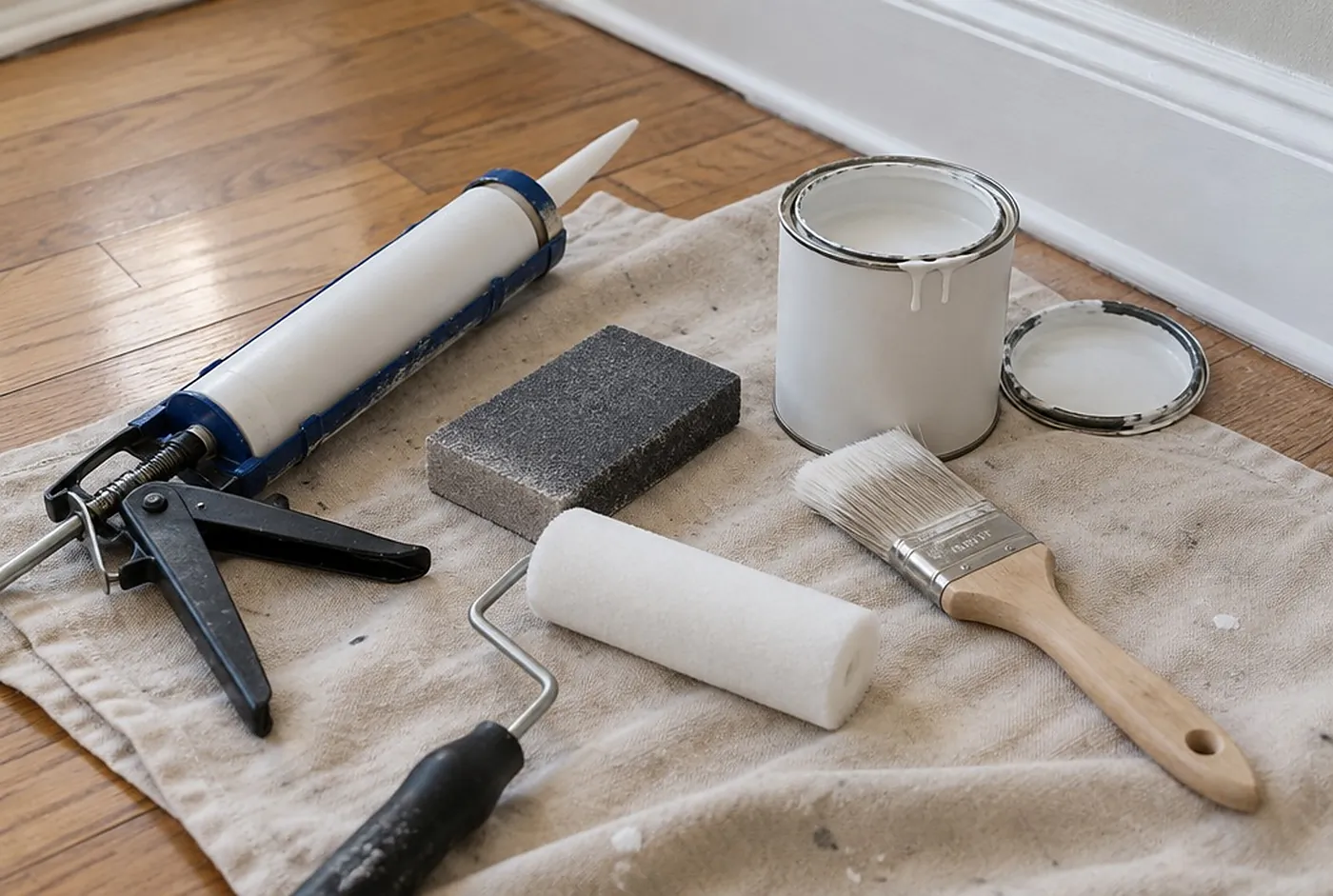
Your supply list
- 2-inch to 2½-inch angled sash brush. The main trim tool. Nylon/polyester bristles suit water-based paint.
- Small foam or fine-finish roller. Smooths the flat panels of a door.
- Painter’s tape and drop cloths. Protect walls, floors, glass and hardware.
- 120-grit sandpaper, plus 80-grit for rough trim. Dulls the shine and smooths patches.
- Spackle or wood filler and a putty knife. Fills nail holes and dents.
- Paintable caulk and a caulk gun. Closes the gap between trim and wall.
- Primer. For bare wood, patches, and glossy or oil-based surfaces.
- Trim and door enamel. A hard-wearing waterborne enamel in satin or semi-gloss. A front door needs an exterior-rated one.
- Screwdriver or drill, and sawhorses. Take hardware off and lay interior doors flat.
- Tack cloth, damp sponge and denatured alcohol. Clear the dust, and test old paint: denatured alcohol (not rubbing alcohol) lifts water-based paint off on a cotton ball.
How to Paint Trim and Doors, Step by Step
- 1 Clean and sand
- 2 Fill and caulk
- 3 Tape
- 4 Prime
- 5 Trim, top down
- 6 Interior doors
- 7 Front door
- 8 Recoat
- 9 Untape and rehang
Step 1: Clean and sand
Wash trim and doors with a degreasing soap and a damp sponge, rinse and let them dry. Sand off the shine: 120-grit on smooth trim, or 80-grit first and then 100- or 120-grit on rough, worn trim. Wipe away the dust with a tack cloth.
Step 2: Fill and caulk
Fill nail holes and dents with lightweight spackle, let it dry and sand it with 120-grit. Then caulk the gap where trim meets the wall with paintable caulk, smooth it with a damp finger and let it cure before you paint.
Step 3: Tape and protect
Tape the wall and ceiling next to the trim with long strips and press the edge down with a putty knife. Lay drop cloths along baseboards. On doors, take off the hardware and bag it by door, and tape over what stays.
Step 4: Prime where needed
Prime bare wood, spackled patches and any door going from dark to light. Not sure whether old paint is oil-based? Rub denatured alcohol on a cotton ball: if paint comes off, it is water-based; if not, it is oil-based and needs the right primer. Let the primer dry (24 hours in Sherwin-Williams’ trim guide), then sand lightly with 120-grit.
Step 5: Paint the trim from the top down
Do crown molding first, then window and door casings, then baseboards. Dip a 2-inch angled brush about a third of the way, tap off the extra, lay on a few feet of paint in short strokes, then smooth with one long, light stroke without adding more paint.
Trim goes top down
- 1 Crown molding first.
- 2 Window and door casings next.
- 3 Baseboards last, so drips land on nothing you still have to paint.
Step 6: Paint interior doors
Take off the hardware and, if you can, lay the door flat on sawhorses. Brush the recessed panels first with an angled brush, then roll the flat areas with a small roller in thin, even layers.
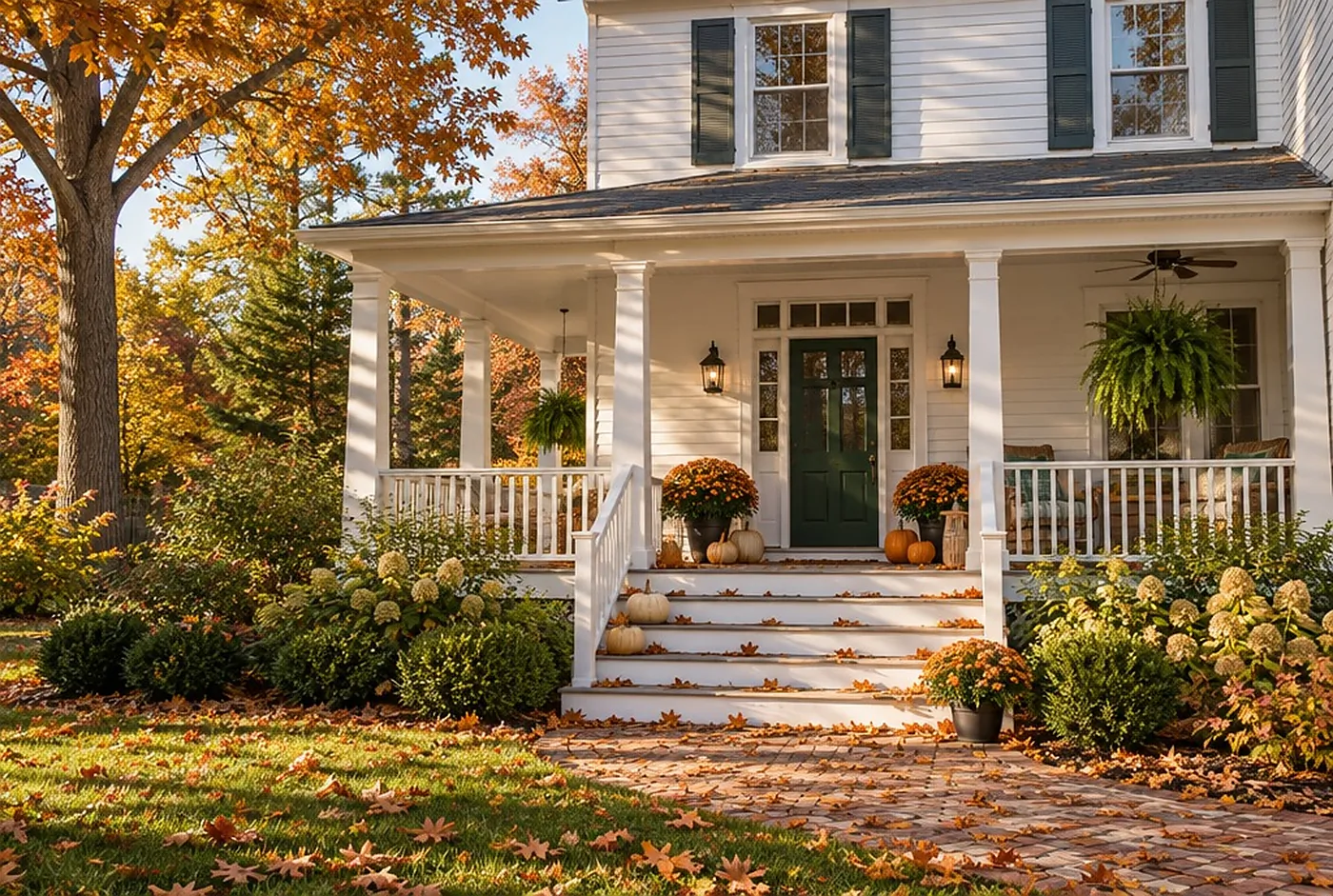
Step 7: Paint a front door
Use an exterior paint that resists UV and weather, on a mild, dry day. Wash with a degreaser, sand lightly, tape the knob, glass and hinges, and prime bare or dark doors. Brush the recessed areas, roll the flat ones, and paint both sides and the hinged edge.
Painting a panel door
- 1 Recessed panels first, with an angled brush.
- 2 The flat rails and stiles next, with a small roller in thin, even layers.
- 3 Both sides and the hinged edge on a front door.
Step 8: Let each coat dry, then recoat
Trim enamels are ready to recoat in about 4 hours for Sherwin-Williams Emerald Urethane Trim Enamel and 16 hours for Benjamin Moore Advance, at 77°F and 50% humidity. On a front door, Benjamin Moore says to wait at least 24 hours between coats, and longer in humid weather.
Step 9: Remove the tape and rehang the hardware
Pull the tape slowly once the paint is dry to the touch. Put the hardware back after the last coat is fully dry, and leave doors open until then so they do not stick.
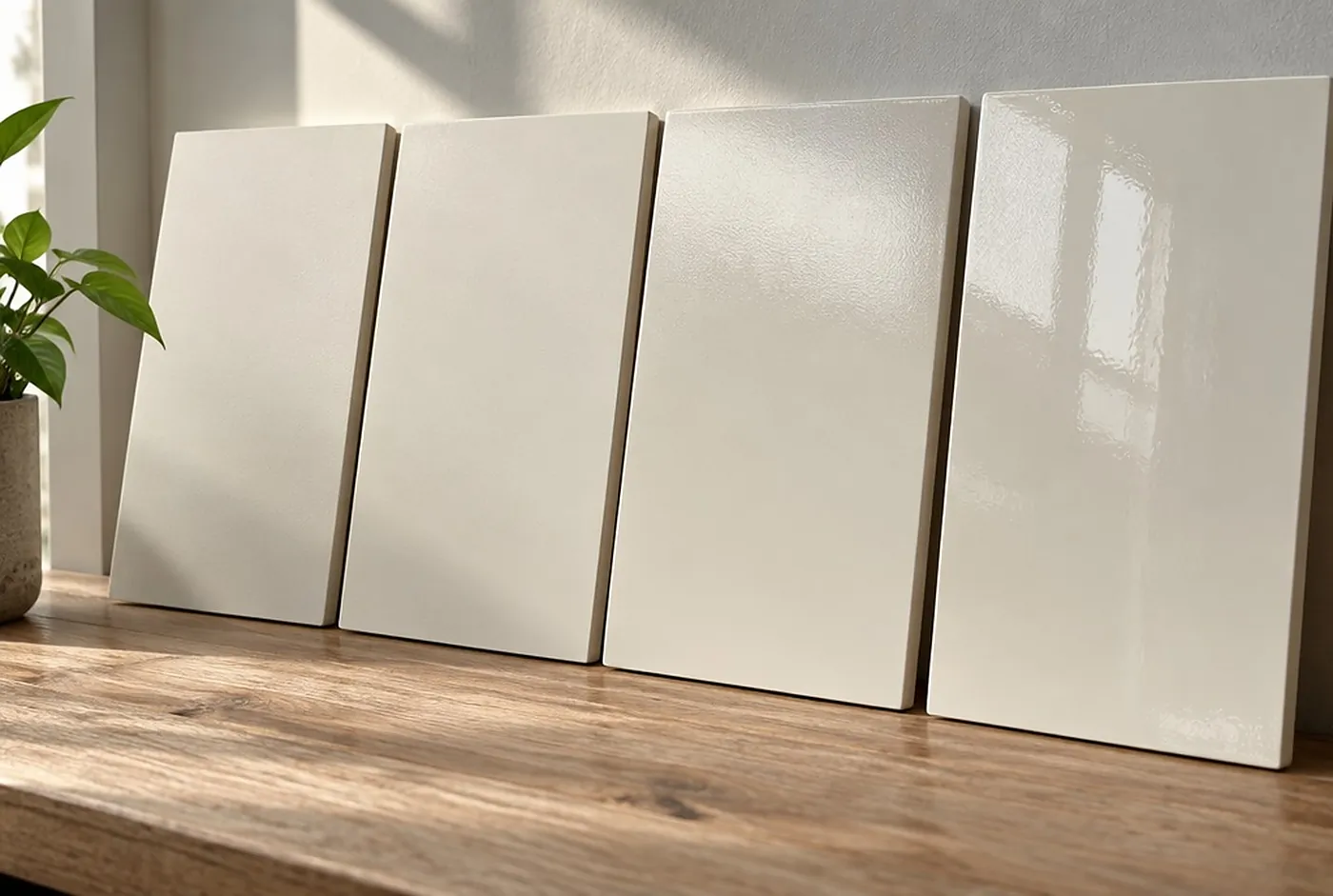
Which Sheen for Trim and Doors?
Shinier paint is tougher and easier to wipe, and it shows flaws more.
Three sheens for trim and doors
-
Satin
A soft luster with better stain resistance and durability than lower sheens. Benjamin Moore lists it for trim, interior doors and, in exterior paint, front doors.
- Shine: 3 of 5
- Hides flaws: 3 of 5
- Easy to wipe: 3 of 5
-
Semi-gloss
The usual trim pick. Sherwin-Williams says semi-gloss or gloss suits trim because it is more durable and easier to clean.
- Shine: 4 of 5
- Hides flaws: 2 of 5
- Easy to wipe: 4 of 5
-
High gloss
Mirror-like and very durable, but it accentuates blemishes. Benjamin Moore says it takes careful prep and application.
- Shine: 5 of 5
- Hides flaws: 1 of 5
- Easy to wipe: 5 of 5
Our paint sheen guide compares every sheen, room by room.
How to Pick a Front Door Color
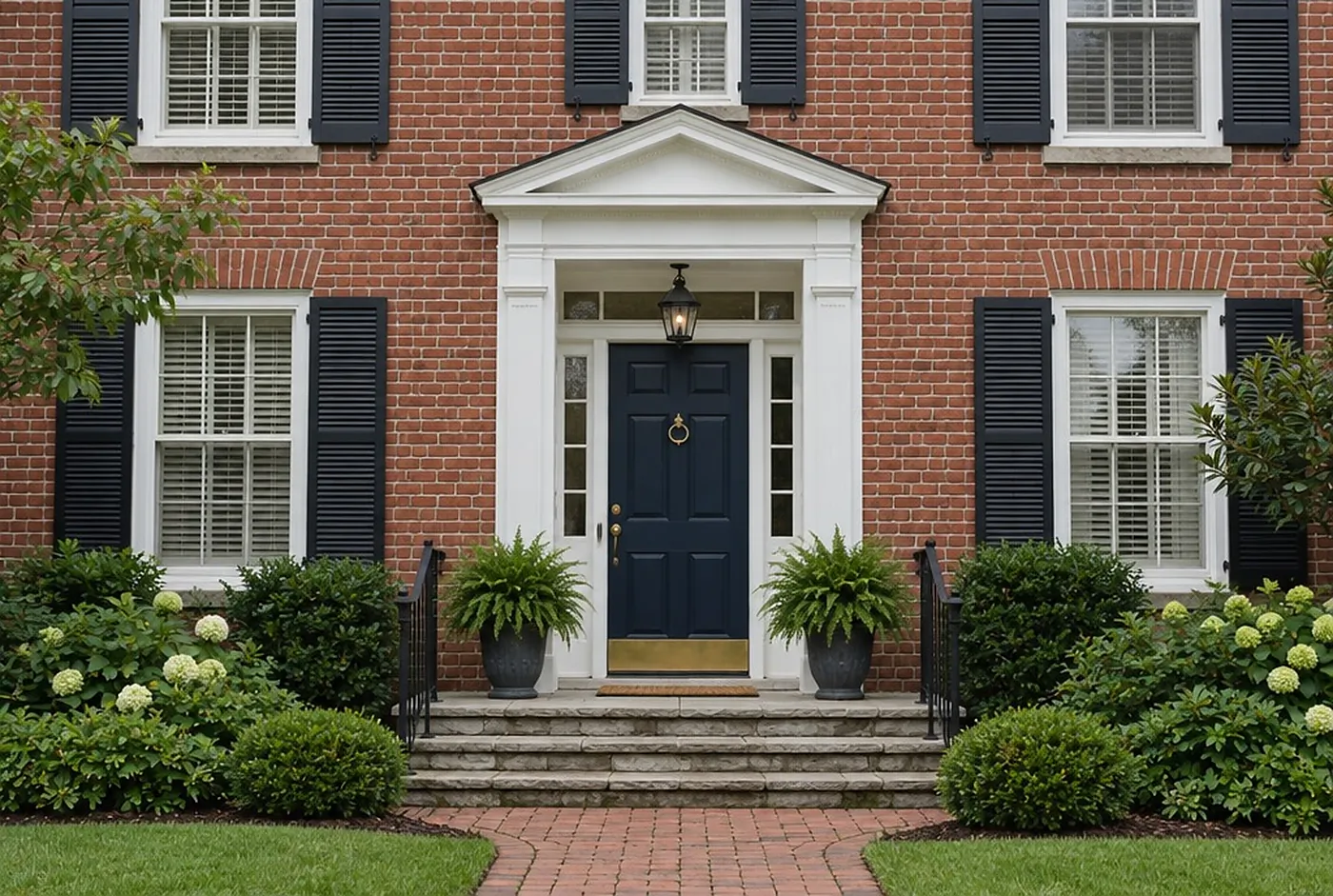
- Start with what won’t change. Sherwin-Williams’ color advice starts with permanent features, such as brick, and making sure the new color works with their undertones. Benjamin Moore adds the siding, landscaping and decor.
- Choose contrast or a match. A saturated door on a neutral exterior makes the door the focal point. A door in the same color family as the siding looks calm and unified.
- Look inside. Benjamin Moore suggests considering the colors the door opens into, so the entry flows.
- Test a sample. Color looks different in different light, says Sherwin-Williams, so view a sample in the morning, afternoon and evening before you commit.
Front Door Paint and Memphis Weather
An exterior door needs exterior-rated paint. Sherwin-Williams says it must resist UV and weather, because the outside face is exposed to the elements. Its Emerald Urethane Trim Enamel, which is rated for exterior doors and trim, goes on above 50°F, and its Duration exterior data sheet says not to paint in direct sun or when rain is expected within 2 to 3 hours.
Front door weather rules
- 50°F+ for Emerald Urethane Trim Enamel
- 2–3 h with no rain expected, says Duration’s data sheet
- 24 h between coats on a front door, says Benjamin Moore
In Memphis, afternoon sun can bake a door so the paint dries too fast to level out, and storms roll in fast. Paint in the early morning or late afternoon, as Sherwin-Williams suggests, and watch the forecast. Humidity slows drying, so add time between coats, and wash off spring pollen first. Fall and the calmer weeks of spring are the easiest windows; see when to paint outside in Memphis.
When to Call a Pro
Trim and doors suit a patient DIYer, but the work adds up. Call a painter for a whole house of trim, high crown molding, old oil-based trim that needs the right primer, or a front door on a tall porch.
Dario’s Painting paints baseboards, crown and casings, caulked where they meet the wall, plus interior doors and front doors. Trim, doors or just the front door can be a job on its own, and the quote prices only what you ask for. See trim, doors and baseboards, or exterior painting if the door is part of a bigger job.
Got questions?
How do I paint a front door?
Remove the hardware, wash the door with a degreaser, sand lightly, tape the glass and knob, and prime if needed. Then brush the recessed areas and roll the flat ones with exterior paint, on both sides. Benjamin Moore says to allow at least 24 hours between coats, so plan on at least two days.
How do I paint baseboards without getting paint on the wall or floor?
Tape the wall with long strips, press the edge down with a putty knife, and cover the floor with drop cloths or tape along its edge. Dip the brush only a third of the way, tap off the extra and use light pressure. Caulk the gap at the wall first so the line stays crisp.
Should I paint trim or walls first?
Sherwin-Williams says walls first and trim last, so drips land on nothing still to be painted. Benjamin Moore paints the trim first and protects it with tape when it does the walls. Either order works if you tape cleanly and let paint dry before taping over it.
How do I paint an interior door?
Take off the hardware, wash the door with degreasing soap, sand it, and prime if it is bare. Brush the recessed panels first with an angled brush, then roll the flat areas in thin, even layers. Sherwin-Williams says to wait at least 4 hours before the second coat, and leave the door open until it is dry.
How do I pick a front door color?
Start with your brick, roof and siding, decide between contrast and a match, think about how it flows with the inside, and test a sample at different times of day. If your neighborhood association reviews exterior colors, check its approved list first.
When should I paint an exterior door in Memphis?
Pick a mild, dry stretch, which in Memphis usually means fall or the calmer weeks of spring, and avoid direct afternoon sun. Check the label for the minimum temperature: Sherwin-Williams’ Emerald Urethane Trim Enamel needs air above 50°F.
Sources
- Sherwin-Williams: How to Paint Trim — 120- and 80-grit sanding, spackle, taping, priming with a 24-hour dry
- Sherwin-Williams: How to Paint Interior Doors — degreasing soap, panels first, roller for the flat areas, 4 hours before the second coat
- Sherwin-Williams: How to Paint a Front Door — exterior paint, taping, hinged edge, early morning or late afternoon
- Sherwin-Williams: The Best Order to Paint a Room — trim last; semi-gloss or gloss is more durable and easier to clean
- Sherwin-Williams: How to Choose Paint Colors — permanent features and undertones; test a swatch at different times of day
- Sherwin-Williams: Homeowners Association Color Archive — approved HOA color schemes; run the final choice by your association
- Sherwin-Williams: Emerald Urethane Trim Enamel data sheet — recoat 4 hours at 77°F and 50% RH; apply above 50°F; interior and exterior doors and trim
- Sherwin-Williams: Duration Exterior Acrylic Satin data sheet — do not paint in direct sun; avoid painting if rain is expected within 2–3 hours
- Benjamin Moore: How to Paint Trim — crown, casings, then baseboards; brush loading; caulk cured before prep
- Benjamin Moore: How to Paint a Front Door — denatured alcohol test; 24 hours between coats; at least two days; both sides
- Benjamin Moore: 17 Front Door Colors — match the exterior palette, contrast vs monochrome, colors the door opens into
- Benjamin Moore: How to Choose a Paint Finish — satin, semi-gloss and high gloss for trim and doors
- Benjamin Moore: Advance Waterborne Interior Alkyd Semi-Gloss data sheet (793) — recoat 16 hours at 77°F and 50% RH
- Benjamin Moore: 5 Best Practices for Painting Doors — label hardware bags; extra dry time in humid, wet or cold weather
- U.S. EPA: Renovation, Repair and Painting Program for do-it-yourselfers — homes built before 1978 may have lead-based paint; testing
Checked September 2026. Prices and product details change; your written estimate has the numbers for your house.