How to paint kitchen cabinets yourself
 Dario’s PaintingSep 30, 20268 min readLast updated: Sep 30, 2026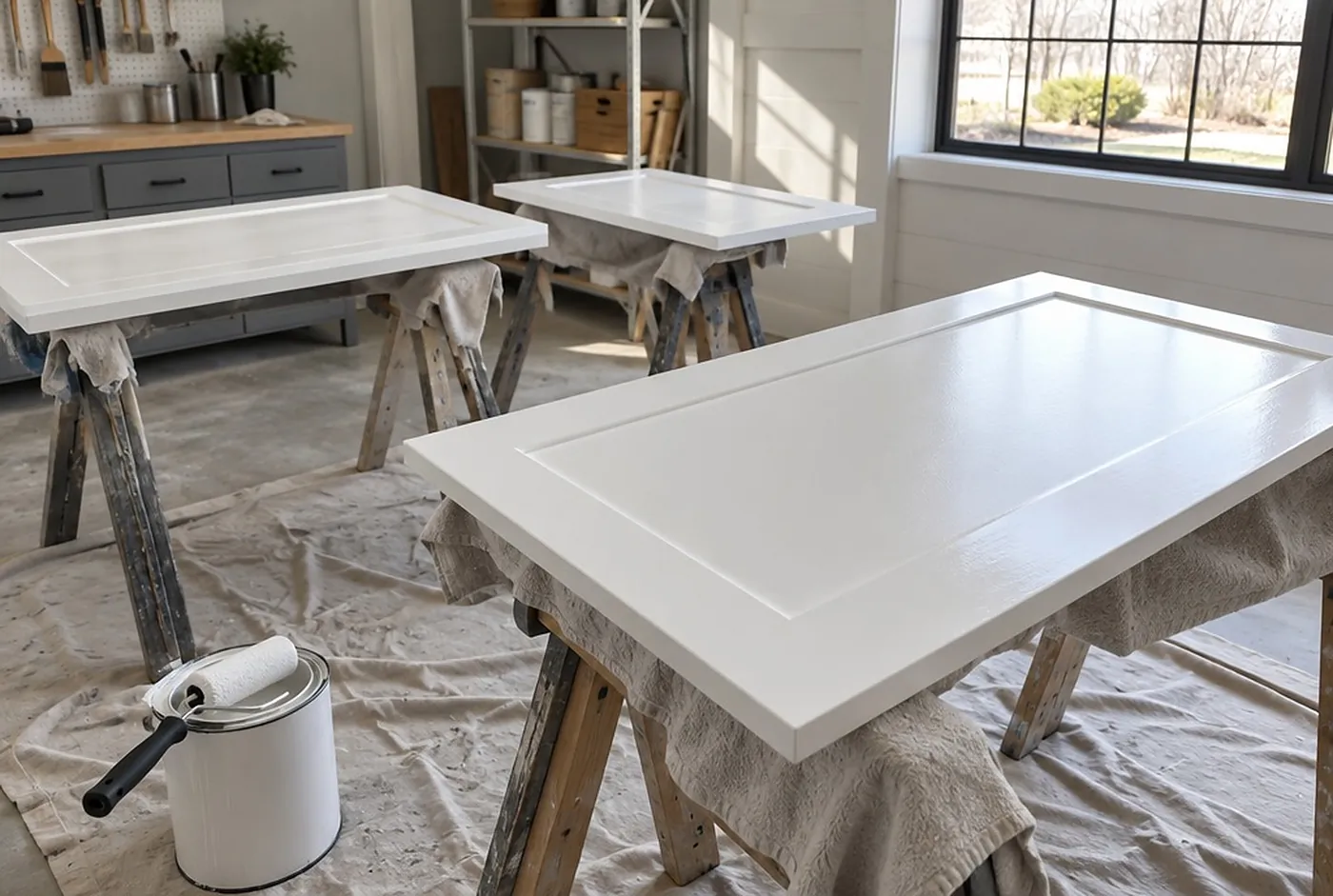
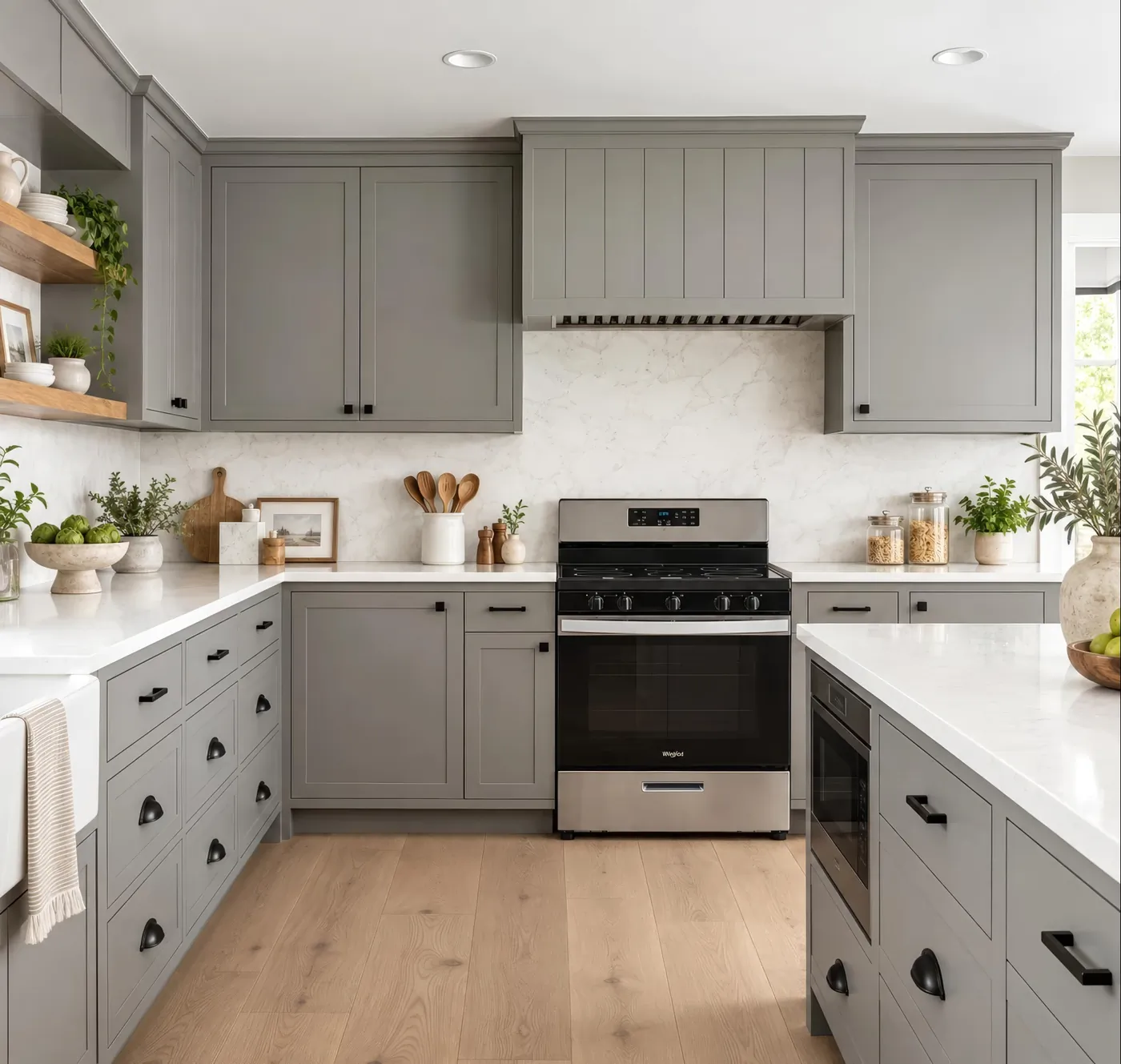
To paint kitchen cabinets, take off and label the doors and hardware, degrease, scuff-sand, prime with a bonding primer, then put on two coats of cabinet enamel with a sprayer or a brush and roller. Expect a weekend to a full week of work, then at least 24 hours of drying before the doors go back and 5 to 7 days before heavy cleaning. This guide covers what you need, the steps, sprayer vs brush, dry time vs cure time, and how painting compares with refacing or replacing. Rather hand it off? See cabinet painting and refinishing in Memphis.
What You Need
You also need a flat, well-ventilated place to lay the doors while they dry.
Your supply list
- Screwdriver or drill, painter’s tape and a marker. Remove doors and hinges, then label every door and its spot on the cabinet.
- Degreasing cleaner and a sponge. Lift cooking grease that paint will not stick to.
- Sandpaper (100- to 150-grit and 220-grit) and wood filler. Dull the old finish, fill dents, then smooth the primer and each coat.
- Bonding primer. Grips slick, glossy surfaces. Sherwin-Williams Extreme Bond and Benjamin Moore Fresh Start are two examples.
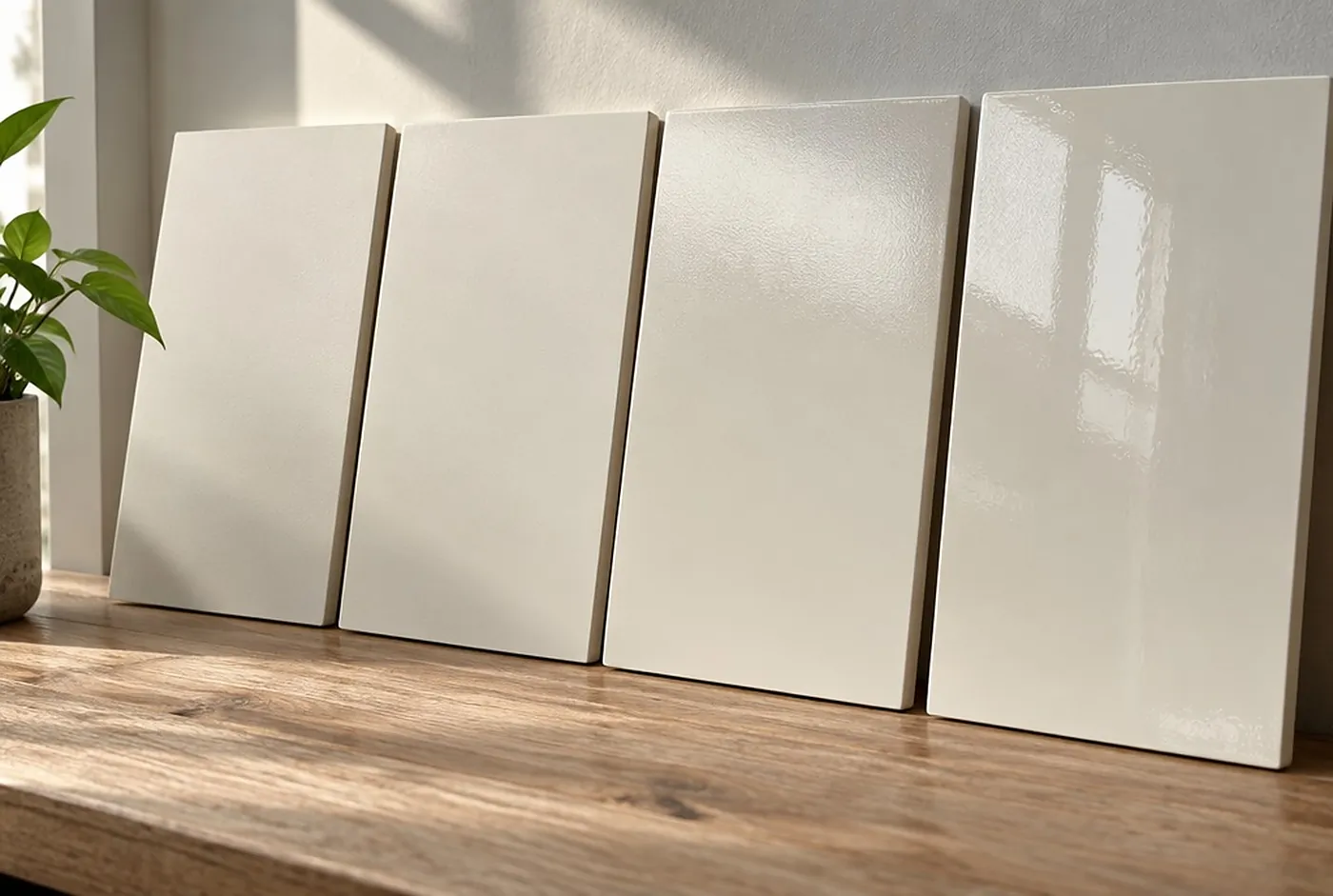
- Cabinet enamel. A hard-wearing waterborne enamel in satin, semi-gloss or gloss; see our paint sheen guide. Sherwin-Williams Emerald Urethane Trim Enamel and Benjamin Moore Advance are two examples.
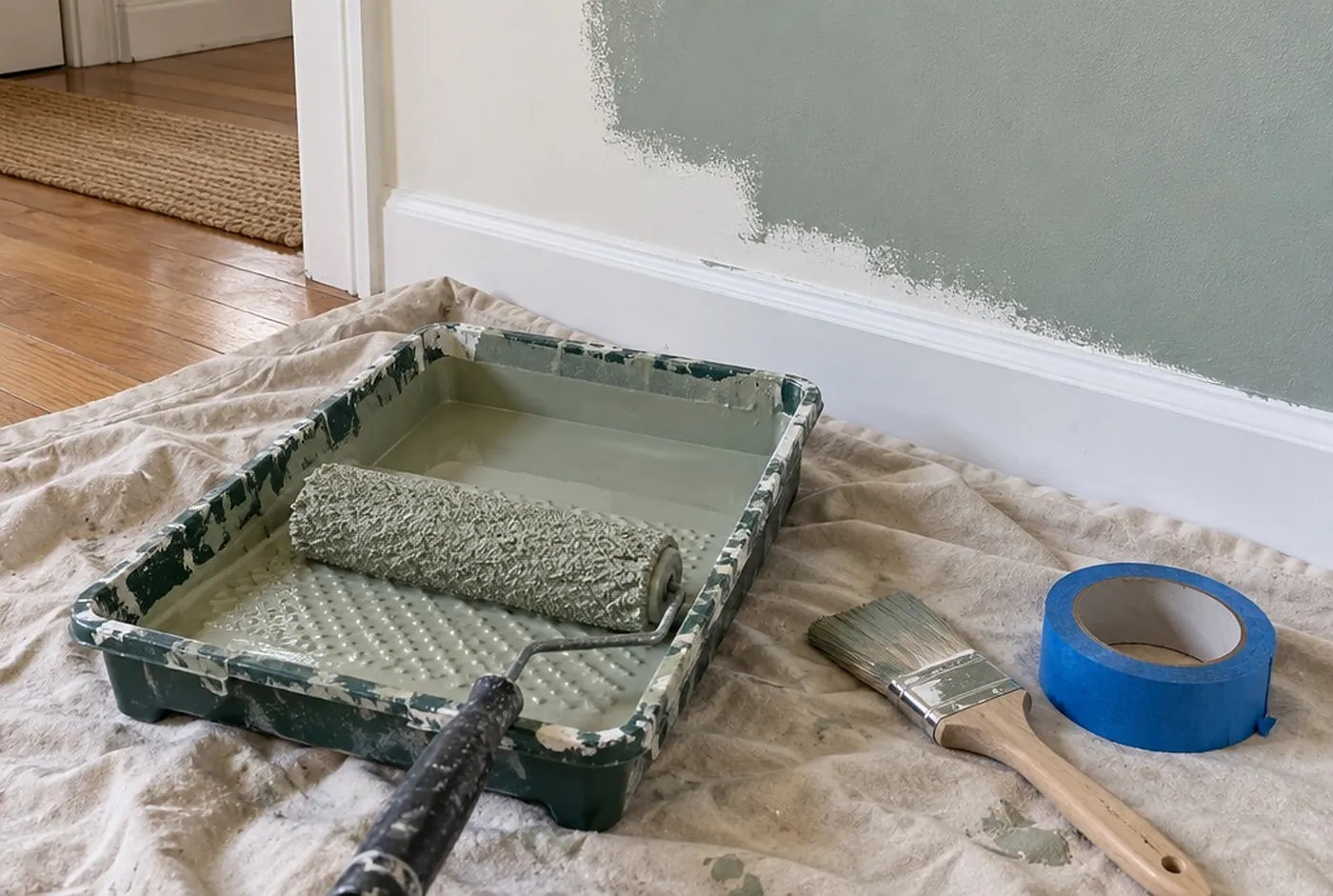
- Angled brush and small roller. Brush the edges and recessed panels and roll the flat areas, or use a sprayer.
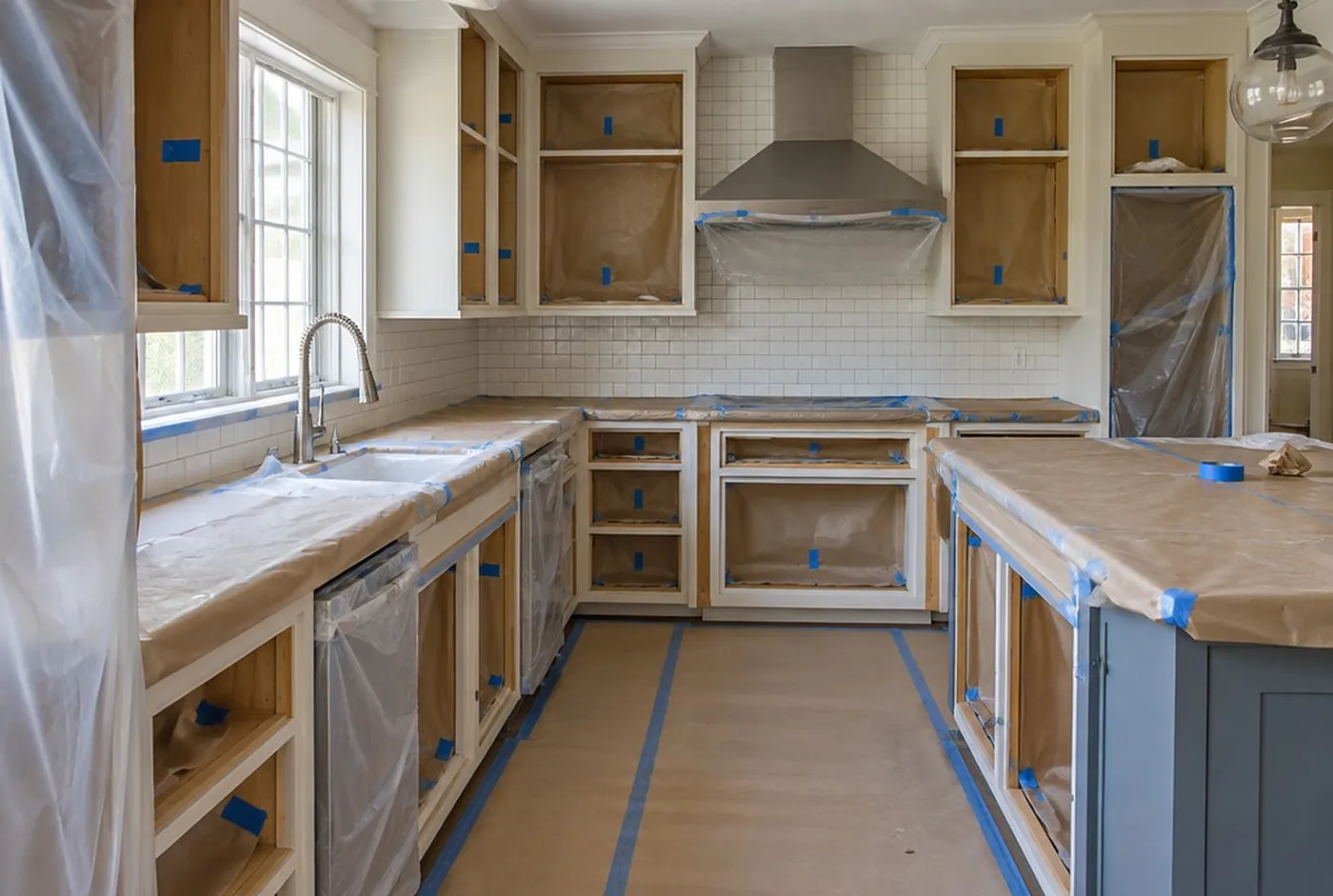
- Drop cloths and painter’s tape. Protect counters, walls, appliances and floors.
- Sawhorses or a table. Flat surfaces are the key: lay the doors flat so the paint levels.
- Respirator. A NIOSH-approved respirator for sanding and spraying, with fresh air moving.
How to Paint Kitchen Cabinets, Step by Step
- 1 Remove and label
- 2 Degrease
- 3 Scuff-sand
- 4 Prime
- 5 First coat
- 6 Second coat
- 7 Dry and cure
- 8 Rehang
Step 1: Remove and label the doors and hardware
Take off every door, drawer front, hinge and pull. Stick a numbered piece of painter’s tape on each door and a matching number inside its opening, and bag the hardware by door. Tape drop cloths over the counters and floor.
Step 2: Degrease every surface
Wash doors, drawer fronts and cabinet boxes with a degreasing cleaner and a damp sponge, then let them dry completely. Spend extra time near the stove, because paint will not bond to cooking grease.
Step 3: Scuff-sand and fill
Fill dents and holes with wood filler, then sand everything with 100- to 150-grit paper until the shine is gone. You are roughing the surface, not stripping it. Wipe off the dust with a slightly damp cloth. Open-grain wood like oak shows its grain through paint unless the grain is filled.
Step 4: Prime with a bonding primer
Brush and roll one coat of bonding primer on every surface. When it is dry, sand lightly with 220-grit and wipe off the dust. Benjamin Moore allows sanding after at least 1 hour; Sherwin-Williams says at least 24 hours.
Brush first, then roll
With the door flat, brush the parts a roller can’t reach, then roll the flat frame right away so the brush marks level out.
- 1 Brush the edges and the recessed panel.
- 2 Roll the flat rails and stiles around it, keeping a wet edge.
Step 5: Apply the first coat
With the doors laid flat, brush the edges and recessed panels first, then roll the flat areas right away so the brush marks level out. Keep a wet edge. A sprayer is the other option; see the comparison below.
Step 6: Sand lightly, then apply the second coat
Wait until the first coat is completely dry: at least 16 hours for Benjamin Moore Advance, and 24 to 48 hours in Sherwin-Williams’ cabinet guide. Sand lightly with 220-grit to knock off drips and dust, wipe clean and apply the second coat the same way.
Step 7: Let it dry and cure
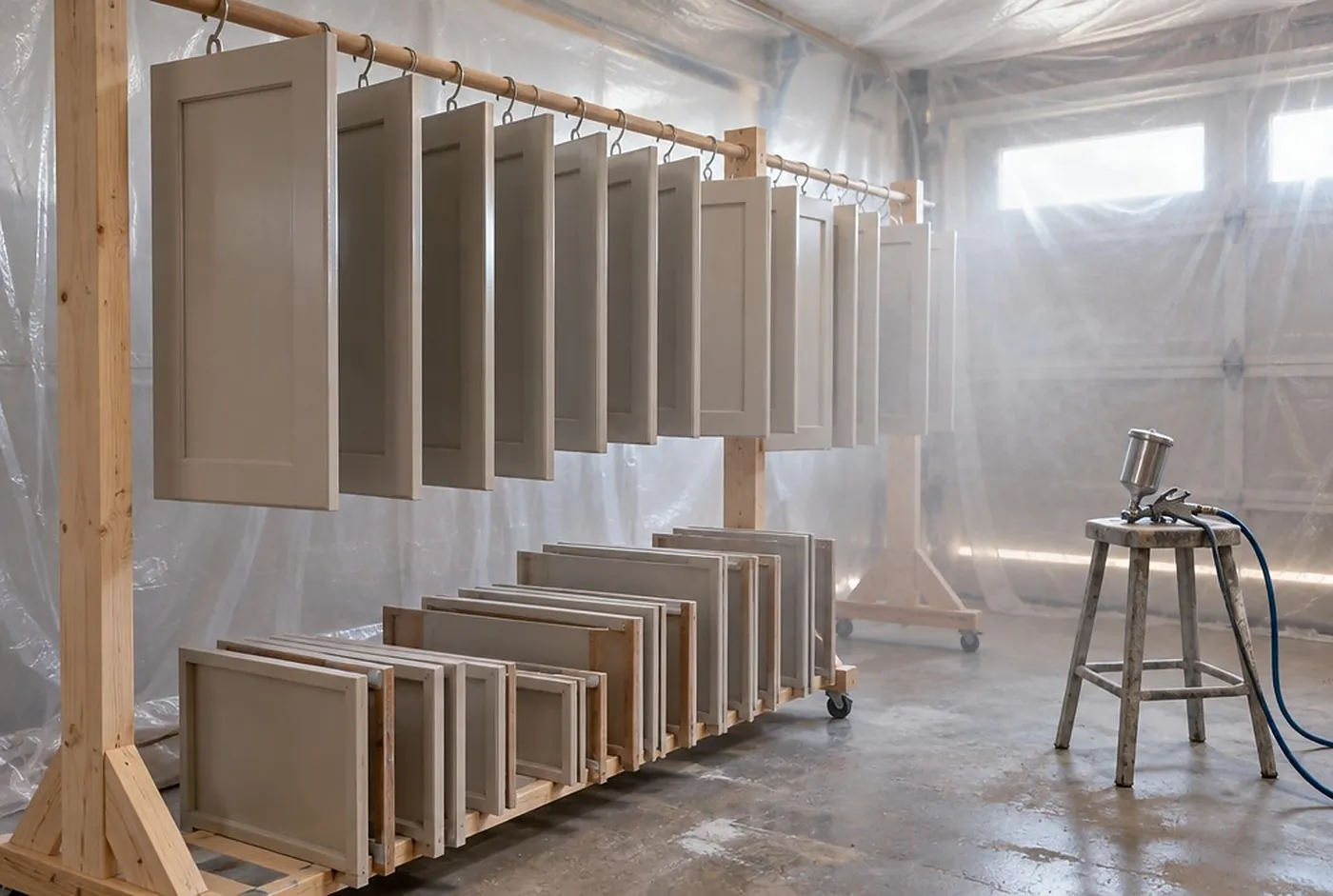
Leave the doors flat in a ventilated room for at least 24 hours; Benjamin Moore says two or three days is better. The finish keeps hardening long after it feels dry, so read the timeline below before you use the doors hard.
Step 8: Rehang the doors and hardware
Reinstall hinges and pulls door by door, using your numbers. Doors hung too soon can stick to the frames, so be gentle and skip heavy scrubbing for 5 to 7 days.
Sprayer vs Brush and Roller
Both work. Benjamin Moore and Sherwin-Williams each show a brush and roller for cabinets, and a sprayer gives the smoothest finish.
| Brush and roller | Sprayer | |
|---|---|---|
| Finish | Good on flat doors if you keep a wet edge, but brush marks can show. | Smoothest, with no brush marks. |
| Paint and gear | Uses less paint, and the tools are cheap. | Uses about 30 percent more paint. Most homeowners do not own a sprayer, and renting one runs about $40 to $120 a day. |
| Setup | Tape and drop cloths. | Mask everything nearby and spray where fresh air moves; practice on a spare board first. |
| Good for | First-timers and small jobs. | Many doors, and a factory-like finish. |
Dry Time vs Cure Time
Dry means you can touch it without leaving a mark. Cure means the finish has hardened. A cabinet door can feel dry in hours and still scuff for weeks.
From wet to hard: two cabinet enamels
At 77°F and 50% humidity. Memphis humidity pushes every step later.
- 1 to 6 hours: Dry to the touch.
1 hour for Sherwin-Williams Emerald Urethane Trim Enamel; 4 to 6 hours for Benjamin Moore Advance.
- 4 to 48 hours: Ready for the next coat.
4 hours on the Sherwin-Williams data sheet, though its cabinet guide says 24 to 48 hours; 16 hours for Advance.
- 24 to 48 hours: Doors back on.
At least 24 hours (Benjamin Moore); 24 to 48 hours after the last coat (Sherwin-Williams).
- 5 to 7 days: Heavy cleaning or rubbing.
Wait this long, says Benjamin Moore.
- Up to 30 days: Fully hardened.
Depending on the weather (Benjamin Moore Advance).
Memphis humidity slows all of this. Paint dries and hardens slower in humid air, and Memphis is humid for much of the year. Benjamin Moore says high humidity or cooler temperatures prolong dry, recoat and cure times, so plan for the long end of each range and run the air conditioning, which also acts as a dehumidifier.
Paint vs Reface vs Replace
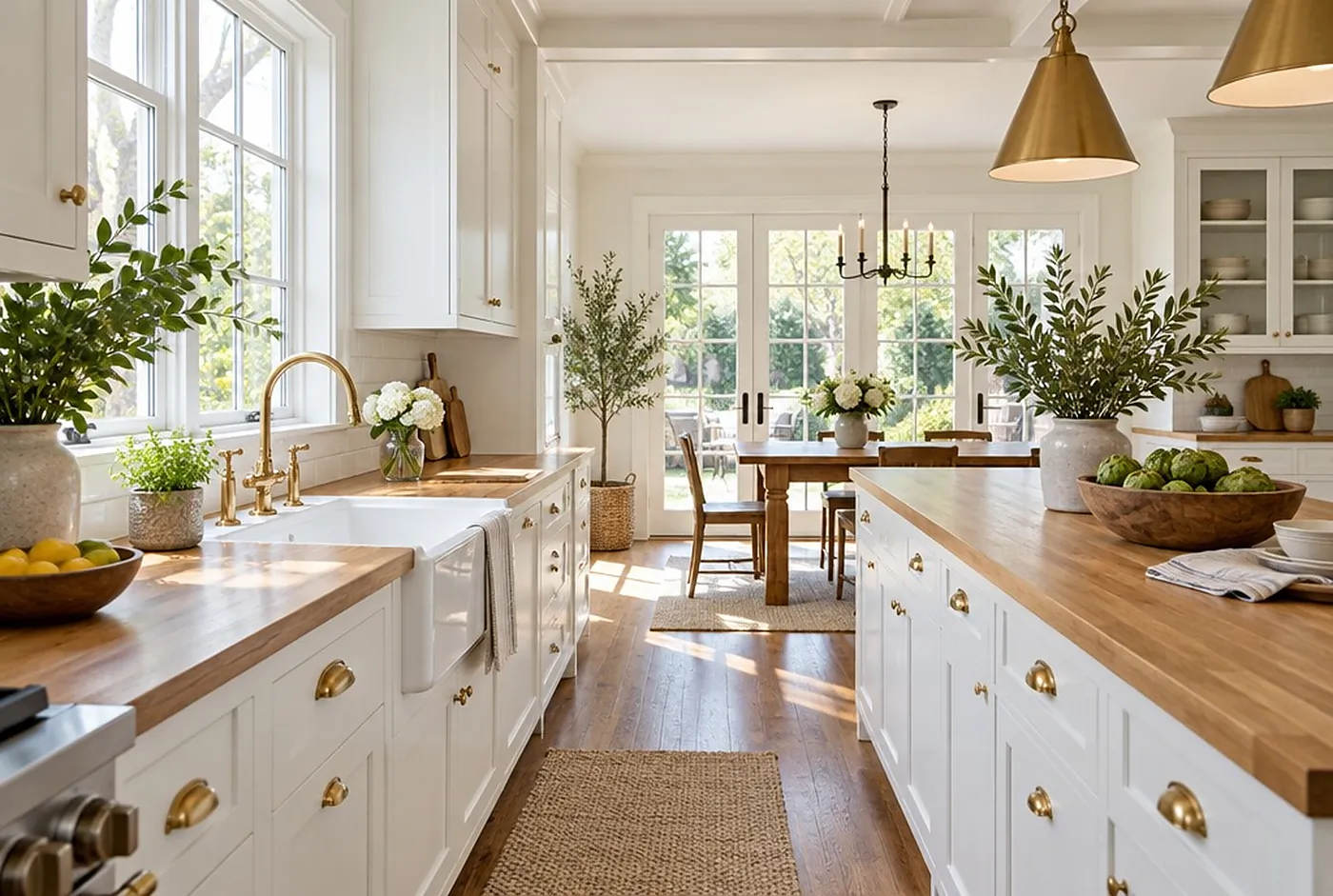
If the boxes and doors are solid and you like the layout, paint changes the look without tearing the kitchen out. Many Memphis kitchens have solid wood cabinets that are sound but dated, and those are good candidates for paint. Boxes swollen by a leak, or doors that are warped or falling apart, will not be fixed by paint.
| Paint | Reface | Replace | |
|---|---|---|---|
| What changes | Color and finish. Same doors, same boxes. | New doors and drawer fronts, plus new veneer on the boxes. | Everything, including the layout if you want. |
| Cost | The lowest of the three. | Less than replacing; HomeAdvisor says 30% to 50% less. | The highest. |
| Time | A pro crew can typically do an average kitchen in 4 to 5 days (Fixr). | About 3 to 5 days for a pro crew (HomeAdvisor). | Several weeks (HomeAdvisor). |
| Good fit when | The boxes and doors are solid and the layout works. | The boxes are sound but you want new door styles, or laminate is too worn to paint. | The boxes are damaged, or the layout has to change. |
Cost guides list very different numbers for painting cabinets, so our house painting cost guide shows the ranges side by side. A written estimate gives the number for your kitchen.
When to Call a Pro
Painting cabinets is a fair DIY job if you have the time. Bob Vila puts 200 square feet of cabinets at about 20 hours of prep plus 15 to 30 hours to prime, paint, refit and clean up, and the kitchen is hard to use for days.
The hours behind 200 sq ft of cabinets
- About 20 h of prep
- 15–30 h to prime, paint, refit and clean up
- 35–50 h in all, while the kitchen is hard to use
Call a painter when you want a sprayed finish, a big color change, or your kitchen back sooner. Dario’s Painting takes the doors off and numbers them, sands and primes everything, sprays the finish with drying time between coats, and hangs each door back where it came from. If paint is the wrong answer for your cabinets, Dario tells you at the visit. See cabinet painting and our guide on DIY vs hiring a painter.
Got questions?
Can I paint or refinish kitchen cabinets myself?
Yes, if you have a flat place to work and the time. Fixr says a DIY job takes a weekend to a full week. Refinishing yourself means the same steps as above: remove and label the doors, degrease, sand, prime, put on two coats and let the finish cure.
Do I have to sand kitchen cabinets before painting?
Scuff-sand, yes. Benjamin Moore says most cabinet finishes are too smooth or glossy to repaint as they are, so sand with 100- to 150-grit. Sherwin-Williams says its Extreme Bond primer may not need sanding on clean surfaces, but test adhesion first, and warns that surfaces that are not clean, dry and dull can weaken the bond.
How long does it take to paint kitchen cabinets?
A professional crew can typically prep and paint an average kitchen in four to five days, says Fixr. A DIY job takes a weekend to a full week. Drying time between coats is why cabinets take longer than walls.
How long before I can use newly painted cabinets?
Doors can go back after at least 24 hours, says Benjamin Moore, but avoid heavy cleaning or scrubbing for 5 to 7 days. The finish can take up to 30 days to reach full hardness, and Memphis humidity can stretch that.
Is it better to paint, reface or replace kitchen cabinets?
Paint when the boxes and doors are solid and you like the layout. Reface when the boxes are sound but you want new doors. Replace when the boxes are damaged or the layout changes. Painting is the least expensive of the three, and refacing costs 30% to 50% less than replacing, says HomeAdvisor.
Sources
- Sherwin-Williams: How to Paint Kitchen Cabinets — steps; primer dries 24 hours before sanding; 24–48 hours between coats and before rehanging hardware
- Sherwin-Williams Tinted blog: Tips & Tricks for How to Paint Kitchen Cabinets — degreasing cleaner; gloss, semi-gloss and satin sheens
- Sherwin-Williams: Emerald Urethane Trim Enamel product data sheet — touch 1 hour, recoat 4 hours at 77°F and 50% RH
- Sherwin-Williams: Extreme Bond Primer product data sheet — rated for kitchen cabinets; sanding may not be needed on clean surfaces; glossy surfaces sanded dull
- Benjamin Moore: How to Paint Kitchen Cabinets — 100–150-grit and 220-grit sanding; primer 1 hour; 24 hours minimum dry; 5–7 days before heavy cleaning
- Benjamin Moore: Advance Waterborne Interior Alkyd Semi-Gloss data sheet (793) — touch 4–6 hours, recoat 16 hours at 77°F and 50% RH; up to 30 days to full hardness; humidity prolongs cure
- Benjamin Moore: How to Make Paint Dry Faster — dry time vs cure time; air conditioners act as dehumidifiers
- Bob Vila: How Much Does It Cost to Paint Kitchen Cabinets? — painting is the cheapest cabinet project; about 20 hours prep plus 15–30 hours for 200 sq ft; sprayers use about 30% more paint; rental $40–$120 a day
- Bob Vila: Cabinet Refacing: What Does It Really Cost? — refacing vs replacing vs refinishing; refacing keeps the boxes
- Fixr: Cost to Paint Kitchen Cabinets — a pro typically needs 4–5 days; DIY a weekend to a full week; when replacement is the better option
- HomeAdvisor: Cost to Reface Cabinets — refacing is 30%–50% less than replacing; 3–5 days to reface; several weeks to replace
- HomeAdvisor: Cost to Paint Kitchen Cabinets — spraying gives a smoother finish; brushing can leave brush marks; damaged laminate
- U.S. EPA: Renovation, Repair and Painting Program for do-it-yourselfers — homes built before 1978 may have lead-based paint; testing
Checked September 2026. Prices and product details change; your written estimate has the numbers for your house.